Showing posts with label African American. Show all posts

Tuesday, October 23, 2018

A Look in Shadows.


2 Black women definitively grounded in their African roots.


As I see it:

We, African Americans, lock ourselves into our ancestry by hair too late in the long history of our relationship with Europeans. It is not spiritual paths African Americans, for the most part, follow; it is fashion. Locked away in our relationship with Euro-Americans is a past in our present that senses where to place one's self in their estimation of ourselves, and who we are as a people.

Rastafarians made stands in the early 20th century in Jamaica because they'd gone home through scripture and culture back to Africa as their Mother's land. That spiritual power preceded the fashion of locking kinky hair during a time when the dreadlocks made the statements conformity could not make! The dreadlocks of the true Rastas, and the holy people in Black lands is far away from the conformity Black Americans embody and deny in one glance towards white Americans for acceptance.

Having a job depends upon their understanding and acceptance of our culture. - Gregory E. Woods, Keeper of Stories 6/30/18


Sunday, October 21, 2018

Outside of AFRICA


Delbert Africa was assaulted by Philadelphia police after the standoff with the group MOVE. An officer was killed that day and the evidence pointed to him being shot by other cops, but 9 MOVE members were all convicted of pulling the trigger. The memory of that is dark taking me back to other related incidents, as brutal as the way their house was burned to the ground with people inside.

During the years I was a police officer in the period of the crack epidemic I saw a lot I won't write about. One of the outstanding things I learned was this: Communities, cities and towns tell, and indicate what they really want. In other words, police reflect the unspoken desire of their communities, and their leaders. I am not sure how sophisticated Black youth are, but as they are seen in the eyes and behavior of police around the country it is clear! How and if that changes is dependent upon the changes Black Americans make within individually, and later collectively. The chances of that are slim contributing to the violence levied against us by brute force, and contempt for Black lives that don't matter to 'them'! The bulk of the battle is within. The enemy is without substance if we own ourselves! - Gregory E. Woods, Keeper of Stories 10/19/18


diagram of Racism


Delbert Africa beaten by this Philly cop with his helmet. When down others kicked him in the face till unconsciousness, dragged him by his hair. 3 cops were tried for excessive force and exonerated...


Wednesday, January 24, 2018

There was a time.


African American woman's pride is won, and her strength is resilient. - Gregory E. Woods, Keeper of Stories 


Abonique.


a Black woman. the pride of her Ancestors!!


Afros were meant to build pride being Black in America, as a Negro becoming an acknowledgement of self above the terror of being murdered with aplomb by whites protected by a system of belief. - Dawn Wolf, Keeper of Stories [November 15, 2017]


Monday, January 15, 2018

Towards a Solution


Màat Petrova releasing or letting go.


"Economic expansion cannot alone do the job of improving the employment situation of Negroes. It provides the base for improvement, but other things must be constructed upon it, especially if the tragic situation of youth is to be solved. In a booming economy Negro youth are afflicted with unemployment as though in an economic crisis. They are the explosive outsiders of the American expansion."

~ Martin Luther King Jr. / "Where Do We Go From Here: Chaos or Community" p207 ©1968, based on the original 1967 edition


2 old women armed and strengthened by each other.


Tuesday, January 2, 2018

What Colored Folks did.


ONE 


The California Eagle was a Negro newspaper in Los Angeles, California. It was founded as The Owl in 1879 by John J. Neimore. The newspaper was renamed the California Eagle and continued in print until 1964.

Charlotta Spears assumed control of the paper after Neimore's
death in 1912. She hired J. B. Bass who would eventually serve as editor until his death in 1934. Charlotta and J.B. married in 1914; historically, she is better known as Charlotta Bass. She retired from the newspaper business in 1951. In 1952 she became the first Colored woman to run for national office as the Vice Presidential candidate on the Progressive Party ticket.

Loren Miller, a civil liberties lawyer and city editor of the Eagle, bought the newspaper after Bass' departure. Loren sold the paper in 1964 to accept an appointment as a justice to the State Supreme Court. The publication also closed that year. -
Michael Scipio  


TWO   


This is a good reminder of how divided Negroes were during the years after slavery on what was the best course of action to win over white folks' resistance to the liberation of 'their' Negroes. What is lost in the current version of the Civil Rights movement is how unpopular King's ideas were at the time. Too much rage had accumulated in the chests of men and women, who'd already taken up arms against whites. There were a number of Black men who had killed white men down South living in the North hiding from the cracker mentality of the South!. . .

I am gonna stop there. Here is a good place for young people to start to think. - Gregory E. Woods, Keeper of Stories 12/18/17 


THREE 


Dr. Martin Luther King Jr. with his family.


“I think we should be slow in criticizing Martin Luther King; he was brave enough to put his life on the line for what he believed. We’re still here talking. That’s proof enough of his bravery over ours.”

~ Dr. John Henrik Clarke. 

Thursday, October 12, 2017

Stand Up for. . .


Seeing young Black athletes, on their knees during the patriotic tributes to the myths of the U.S., makes me feel strong pride buffered by the flaw of Black thinking and fortitude: the collective fear of white people. I can't loose myself into the role of a spectator, where most live, and not feel the pattern embedded in the consciousness of 'money over principal' struggling. These young athletes are not made with the strength of struggle their grandparents had at their age, nor were they steered to be protectors, or taught the fine art of being impeccable aligned with the essentials that support the indifference of a warrior that connects him to the essentials a man needs to be one of knowledge, of power!

In short, I don't believe they know how to make a true stand and will tremble if their owners tell them not to protest for the better good of their people! If it happens will the Black sports fans follow suit and stop supporting the business?

Now, that I don't believe will happen. It is too hard to tear away from those who control the images dominating Black Americans! . . .
- Gregory E. Woods, Keeper of Stories 10/12/17 


Thursday, September 28, 2017

When Sisters Stand We Look Around!


Musa Ibraheem "OUR lives matter. That's what the slogan truly means, but bigots won't accept that our lives are sharply devalued in this society." 

Gregory E. Woods "They can't. Such an admission points back their direction with a responsibility to see and change! It is too much to ask." 


Renee Gray "It's so sad how Media portrayed this 'slogan' into a violence movement. 😢 I was researching the dude they killed (a young Martin) and the crap that came up first in my search was so disheartening to see our society continue to bash us... all out of fear! Smdh I searched blm." 

Gregory E. Woods "It isn't sad, it is revelatory. It leaves a responsibility upon you to do things you know you should. You cannot be responsible for other people's reaction to their truth, You can be truthful to yourself until you find the one thing, or the things you are unable to face and both you, and the whites in fear of this movement will have to face something together in separate places: your fears!

It, or rather this is the way of the warrior!
"


Black Lives Matter. Believe DAT!

Saturday, July 29, 2017

Alchemy revived in the 21st century!


Alchemist traveler found herself in Nigeria, December 21, 2016.


The city of Lagos has changed! I was there after the Biafran war; and it was dangerous, dirty and exciting because the after taste of war is the slight stench of women reliving horror and men trying to restore something they lost: personal power. Men armed with their weapons were loosely organized bandits robbing their own people, raping women; in short, maintaining the sound of terror as a means to a self-centered end! - Gregory E. Woods, Keeper of Stories [July 28, 2017]  


Alchemist traveler in Rio de Janeiro, Brazil May 2016.


STORY

Living The Alchemist is a movement rooted in the lessons learned in the book. We travel to a country, state, or place that we feel our spirit is drawn to. The most invigorating part about our journey’s are we solely depend on our intuition and connection with people for transportation, shelter, and food... ~ Living The Alchemist 


I have to admit to being stunned that Black Americans, for one read the Alchemist, and secondly have taken up with a movement to follow energy lines!

To understand this from my perspective understand how deeply guarded and unadventurous Black Americans are in the modern world looking back, at the least, to the 1970's forward. Bound by the Church and committed to the social order of conformity following energy lines, as I always have, was suspicious, indeed. Not much has changed in all these decades so understand why I am intrigued, delighted and proud of the Black Americans' who have regained an ancient way of travel!
- Gregory E. Woods, Keeper of Stories [July 28, 2017] 


Friday, July 28, 2017

Critique of US!


The below screenshot is a post I wrote on my personal Facebook page Monday evening after being around a lot of inflated ego amped up NYPD officers all day on the fourth.

One white male officer got snippy with me (as I wore my one year son in my baby carrier) as he asked for my ID to prove I lived in my father's building which is on a Manhattan street that was closed off for July 4th fireworks. I... know a white woman, especially one holding a baby, would never be spoken to in the condescending and quick to escalate tone this white officer spoke to me in. All I could say as my husband, son and I headed into my building was, "We need to get back to Namibia."

As my visit home nears a close and I return to Namibia next week, I really don't even know if encouraging you all to 'be safe' is appropriate or even feasible. And I genuinely don't want to mock those of you who have to remain in the States, but I wish you strength and a spirit of urgent mobilization.

RIP Alton Sterling (author unnamed) 


African American woman's reaction to the return to the States.


Saturday, April 8, 2017

IN the VIEW


photographer David Turnbo's version of a Black woman in the 21st century, Alicia Victoria.


"The setting of steel and sadness and the solitude of city life sets off a theme into the consciousness, but it is the consciousness that sets the theme setting up the background of a descendent of ex-slaves. It is quite the story that grips me until I realize how much young people think their distance from those dark days gives them a knowledge that gives them the consciousness to be vigilant, in the way of surviving with a sense of style..." - Gregory E. Woods, Keeper of Stories 4/8/17  


Tuesday, February 28, 2017

Black Scholarship


Books by Black authors and scholars.


Keep Learning About Black History With These 23 Vital Books
Black History Month might be ending, but learning about black history never should.


By Claire Fallon
·

The shortest month of the year is coming to a close, and with it, the country's yearly celebration of Black History Month. The presidential speeches have been declaimed, and the flurry of media inquiry into black achievements throughout American history is subsiding. But the end of February need not ― and should not ― be the end of learning about the history of black people.

The history of black Americans contains immense oppression and suffering, all too often papered over by white-dominated educational systems. It also contains great artistic, scientific and social achievements, for which black creators are often given little credit. With the rich history of African-Americans often ignored save for one short month each year, it's no wonder many never learn much more than George Washington Carver's peanut-based achievements.

So why not commit to learning about black history all year round? Here are 23 books, worth reading in any season, that dive deeper into major moments in black history:

Isabel Wilkerson shines a light on the human stories behind the mass movement
of black people in the rural South to Northern, Eastern and Western cities after 1915.

·      
Simon and Schuster
An inside look at the Civil Rights Movement, from one of its most prominent figures


Basic Books
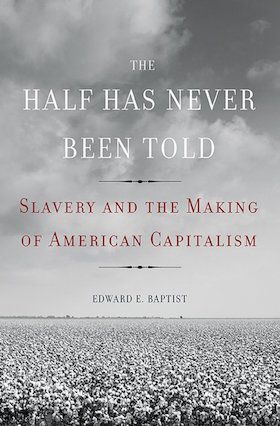
This economic history argues that the evolution of American capitalism was deeply intertwined with slave labor, and documents the inhuman cruelties of the domestic slave trade and productivity pushes that allowed the cotton trade to burgeon in the South.

·       
Metropolitan Books
Family Properties explores an oft-forgotten historical injustice: redlining, a practice by which federal agencies denied mortgage insurance to buyers in black or integrated areas. Redlining rapidly drove segregation and left black families prey to exploitative sellers. Beryl Satter, whose father battled these injustices as a Chicago lawyer, paints both a personal and a sweeping portrait of the phenomenon.

·        
·        ·       
Vintage
For anyone who remains unclear on the problem with white feminism, Killing the Black Body makes it eminently clear. Dorothy Roberts lays out the many distinct ways black women's reproductive rights have been systemically infringed upon, such as forced sterilization - injustices which have often been ignored by a mainstream feminism focused on white, middle-class women's concerns.


·       


Harper Perennial
A portrait of a legendary Supreme Court justice as a lawyer, Devil in the Grove catches up with Thurgood Marshall shortly before he brought the seminal Brown v Board of Education suit The book focuses on Marshalls defense of four young black men in Florida targeted by prosecutors and the KKK after a young white woman made rape allegations.


·       
Nation Books
Ibram X. Kendi examines how racist ideas were spread throughout American history in this sweeping, award-winning history of thought. Bonus: He recently published a reading list for The New York Times, consisting of 24 books he describes as "the most influential books on race and the black experience published in the United States for each decade of the nation's existence."


·       
Houghton Mifflin Harcourt
A detailed history of an influential Chicago-based newspaper that gave voice to the black community, The Defender traces the publication from its founding in 1905 to its role in speaking out about Jim Crow to its profound impact on politics in the middle of the century.


·       


You can call it current events or history in the making, but Wesley Lowery, a Washington Post reporter who has been covering police brutality and Black Lives Matter, brings together the results of his reporting - both political and personal.


What other books about black history should everyone be adding to their must-read lists? Add your own recommendation in the comments.

Naline Hampton


Paris Hilton in West Hollywood !!!!


Sunday, February 12, 2017

White Power! Black Success!


Seoul Secret, a Thai beauty company, has apologized for this advertisement for a skin lightening product that featured the tag line, 'Just being white, you will win.'


terror of slavery by Michael M. Law,
models Donnie Dae, & Smiley Smile


White girl, Billie Jo Long, loves Black men exclusively.


Sheila Johnson, billionaire CEO of Salamander Hotels & Resorts
and [part] owner of three professional sports teams.

founder & CEO of The Living Well Institute, Jewell Elliot drumming at Malcom X park (Nov. 2015)


family of African Americans.


Friday, January 27, 2017

Thinking Ain't Doing!! Do!!!


3 Things African-Americans MUST Do After Trump’s Election
By  


The election of Donald Trump as the next President of the United States of America has brought about mixed emotions. For many African-Americans, emotions have ranged from anger to worry. Let me say this – it’s okay to be emotional for a moment because it’s through the expression of emotions that something gets done. We cannot keep our emotions suppressed. To do so will only lead to more frustration and aggravation.

Within a few weeks, unless something drastic happens, Donald Trump will be sworn into office on January 20th 2017. Just looking at his choices for key cabinet positions, we’re getting a glimpse into how he will run the country. Choosing people with little to no experience to lead departments and agencies shouldn’t surprise too many people, because Trump is more concerned with catering to those who have shown unwavering loyalty to him throughout his campaign. In addition to that, Trump and his administration continues to demonstrate how divided this country is and will be during his presidency.

As African-Americans, we can no longer be party loyalist. Think about it for a moment – more than 90% of African-Americans identify themselves with the Democratic Party. This needs to stop. Am I saying it’s time to switch to the Republican Party? No. What I am saying is that it’s time for us to call out both political party’s. No longer must we allow the Democrats to assume we will vote for them. No more allowing them to pander us for a vote. Let’s face it – whenever African-Americans become so attached to a political party, it’s easy to be misled. Not every Republican is a racist and not every Democrat has the best interest of the Black community in mind.

Because Trump will soon be in the oval office, this is the ideal time for African-Americans to do the following:
  1. Start a small business. Because the Trump administration can’t promise they will increase the federal minimum wage, it’s imperative that entrepreneurship be explored. Don’t let other people or the economy stop you from going into business for yourself.
  1. Begin to get more involved in local politics. While the presidential election will always garner national and international attention, local elections cannot be forgotten. What happens locally has a way of affecting what happens nationally. If you care about your community and where your tax dollars are going, GET INVOLVED. If possible, run for public office so that ‘fair and just’ public policies can be written and implemented for all people.
  1. Protest economically. When injustice shows its ugly face, marching in the streets brings media attention, but an economic protest demands something must be done. When those in Congress and/or those in organizations commit injustice, they listen to protesters when their bottom-line is impacted.
I need to drop this in your spirit – getting too emotional over the election of Donald Trump and the people he chooses can be draining. Does that mean we should not care? Of course not. Does that mean we shouldn’t do our research on the people he chooses? We must definitely do as much research as possible. As people who care about justice, fairness, and equality, we must come together and be solution-oriented. It’s through planning that things will get better.


Dr. Sinclair Grey III is a speaker, author of The ABC’s of Making Business Networking Work For You and success coach. Contact him at www.sinclairgrey.org, drgrey@sinclairgrey.org or on Twitter @drsinclairgrey


White Americans against freedom for Blacks, sovereignty for Red Nations, and against the sanctity of Water and the Feminine Principle. - Gregory E. Woods, Keeper of Stories


Women's March on Washington sign of protest directed towards the heart of President Donald Affront's intent. The humor of this is the power of this. photo by Gaby Grebski.


"Gun protection for a woman is in a special category because their right to defend themselves historically has been in question, denied or taken away by men." - Dawn Wolf, Keeper of Stories


Thursday, November 24, 2016

Do whites support black businesses like we support theirs?


Hello, I hope you're doing well. 
 
As Black Friday approaches, we'd like to remind you of the importance of supporting black owned businesses.  The truth is that no one else buys from African American companies, so when black people abandon them too, they have nothing to support the families of their employees. 
 
This economic imbalance and unfair trading habit has cost us trillions and it's only going to stop when we decide to put it to an end.  When you shop over the holidays, please take the time to support black-owned companies and let's not be so determined to give all of our wealth away. 
 
If you'd like to know what we're offering during the Black Friday Holiday, it's The Black Friday Bundle Pack, consisting of a long list of films and other products from black directors and producers that will entertain and enlighten your family over the Christmas holidays. 
 
The bundle's price has been dropped by over 35% for this week only.  The sale ends in 48 hours. 
 
You can take advantage of this offer by visiting this link. 
 
Please take care and have a wonderful weekend, and remember the importance of buying black, wherever you go.  Our businesses are counting on it. 
 
Sincerely,
 
Dr Boyce Watkins


Tuesday, September 13, 2016

Money behind the idea of freedom. . .


Economic protest.


Kapernick lost his Beats by Dre endorsement and Marshall lost his Air Academy Federal Credit Union deal.

Now the real challenge is: Are we as a forsaken minority community actually going to boycott stuff we are truly linked to and involved in for a greater good and cause? After all.... Are white folks actually the ones buying Beats by Dre head gear??
#FoodForThought 


- Chris Wee-Woo

Black White People: a puzzle.


By necessity Negro men had to assert strength, elegance and poise to vie for the attention respect demands from whites, who did not value Black lives. It was white people's struggle to place equal value upon Black lives that played a role in Negroes' emphasis upon doing better, doing better than the dumbest white man, excelling despite and because of the odds.

A lot of maxims came out of the eras in association with white folks, Mr. Charlie, Ofay, Jim Crow. Established into the code of survival where did the notion of engineering distain for ourselves become the standard for a people who call themselves African Americans?

African American.

That is a helluva an indictment when you think about it. Black Americans have a deeply held contempt of Africa and their connections to the people and the continent. - Gregory E. Woods, Keeper of Stories 9/13/16


Negro man distinguished in his suit. circa early 1900's.


Colored man and wife in Cotton Plant, Arkansas.


Then on the other hand there were the Tuskegee Airmen.


COMBAT Missions

Total Missions - 12th Air Force 1,267 ...
Total Missions - 15th Air Force 311
Total Sorties - 12th Air Force 6,381
Total Sorties - 15th Air Force 9,152
Grand Total Missions 1,578
Grand Total Sorties 15,533
Total Number of Pilots Sent Overseas 450
Total Number of Pilots Graduating From Tuskegee 994
Total Pilots Killed In Action 66
Prisoners of War 32


COMBAT RECORD

Destroyed Damaged Total
Aircraft (aerial) 111 25 136
Aircraft (ground) 150 123 273
Barges and Boats 16 24 40
Boxcars, Other Rolling Stock 58 561 619
Buildings and Factories 0 23 23
Gun Emplacements 3 0 3
Destroyers 1 0 1
Horse Drawn Vehicles 15 100 115
Motor Transports 6 81 87
Power Transformers 3 2 5
Locomotives 57 69 126
Radar Installations 1 8 9
Tanks on Flat Cars 0 7 7
Oil and Ammunition Dumps 2 0 2

AWARDS

Legion of Merit 1
Silver Star 1
Soldier Medal 2
Purple Heart 8
Distinguished Flying Cross 95
Bronze Star 14
Air Medal and Clusters 744

http://www.earthlyissues.com/tuskegee.htm


Tuskegee Airmen, the flying officers.


Thursday, August 4, 2016

Life always asks the question of Black White People

Lace Petite
by FiveRings Photography
November 27, 2013


Harriet Tubman a long time ago said, "I had crossed the line. I was free but there was no one to welcome me to the land of freedom. I was a stranger in a strange land."

That is an emotion hard to capture across the expanse of time if bondage is a way of being in vogue, or feel if one has a life of privilege and is in bondage. No stranger to the feeling of this kind of isolation affords those who have obtained their freedom the deep unction Harriet Tubman carried within her that compelled her to go back and lead and sometimes pull people out of slavery into free land. Harriet Tubman is not the only one, in such a line of work, who bemoaned the state of mind that craved the return to bondage, and resented those who sought to be free. There are few free people and it is a strange land with all the resistance to freedom and truth telling.

- Gregory E. Woods, Keeper of Stories 8.4.14


bikini clad Angela Simmons in door way