Showing posts with label Indigenous art work. Show all posts

Monday, October 15, 2018

TWO Elders Talk


"A profound knowing can come to a grandmother, or grandfather who has walked a certain way with her, or his Ancients..." - Dawn Wolf, Keeper of Stories October 14, 2018 


Native American art of Dana Tiger - Wolf Clan Rider

"What happens when giving is a spiritual imperative from your soul? Go ahead ... see where your true self leads you." - Mereana Taki October 3, 2017  


Saturday, July 22, 2017

Ancient Practice


Mereana Taki shared this:


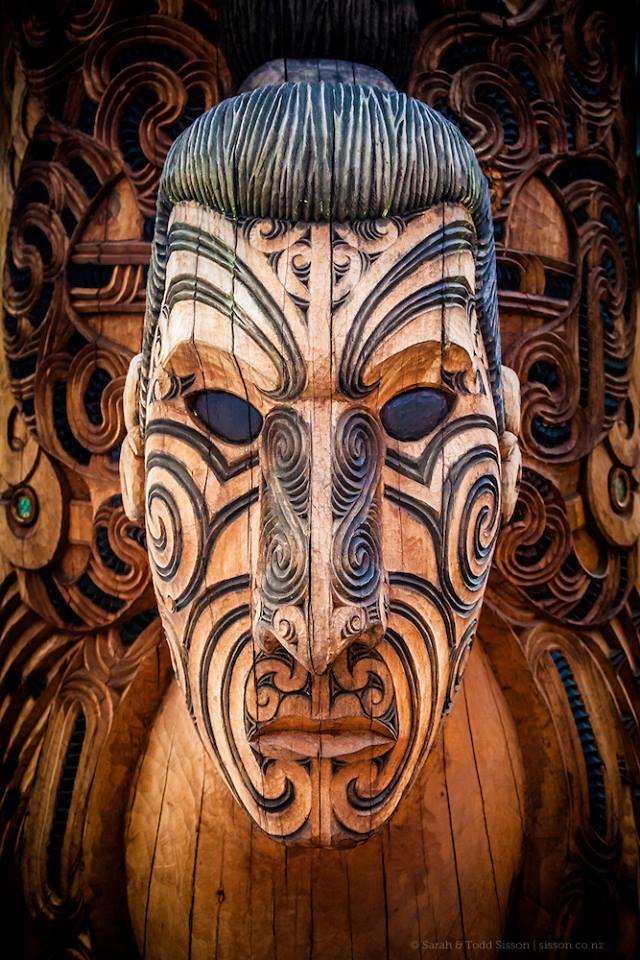
Celestials and they serve a purpose with respect to balance in the Cosmic family. They represent masculine energetics, the creative power to render into materialised forms. The immortals.


"These are Celestials and they serve a purpose with respect to balance in the Cosmic family. There are many words for this kind of representation, remembering they are forged out of the children of Great Forests Tane Mahuta, deity of Great Forests on Earth and in the Cosmic Forest. As such it also represents masculine energetics, the creative power to render into materialised forms. When Carvers create the immortals they usually do not use human forms. In this case they are to remind ourselves where we come from and what we are capable of. I often put these deities up for my own nourishment and protection, Spiritual cleansing of space and as sentinels on the cyber highway." 

Mereana Taki
September 19, 2016 


Tuesday, January 31, 2017

Our Histories


City of Sayil of the Puuc region, just behind Uxmal is one of the great cities of the Puuc region. The Mesoamerican city reached an extension near the four square kilometers. Among the most important buildings of this archaeological zone of Yucatán, are the Palace and the Mirador.


Chalchihuitán, Chiapas, masks made of carved cupapé wood, stucco, resin and shell, during the Viceroyalty, were placed at the entrance of the small cave of Monte Virgen to simulate a barrier of guardians that would cause fear to strangers and protect So the ceremonial offering deposited in its interior. They were elaborated between the seventeenth and eighteenth centuries. - anon


I have deep feelings of resentment for this law, this distributive way of being, of eliminating identity!!! There is nothing polite or nice to say about this disruption of the flow of our ancestry! I am thinking about all the nations believing in this mess who are self-eliminating themselves as the white man, who created this system of thought hoped!! - Gregory E. Woods, Keeper of Stories [Creek, Crow, African]

Members of the Muscogee (Creek) Nation in Oklahoma around 1877, including some with partial European and African ancestry.


Blood quantum laws or Indian blood laws are those enacted in the United States and the former colonies to define qualification by ancestry as Native American, sometimes in relation to tribal membership. It ignored the Native American practices of absorbing other peoples by adoption, beginning with other Native Americans, and extending to children and young adults of European and African ancestry. ...It also ignored tribal cultural continuity after tribes had absorbed such adoptees and mixed-race children.

A person's blood quantum is defined as the percentage of their ancestors, out of their total ancestors, who are documented as full-blood Native Americans. For instance, a person who has one parent who is a full-blood Native American, and one who has no Native ancestry, has a blood quantum of 1/2. Since re-establishing self-government and asserting sovereignty, some tribes may use blood quantum as part of their requirements for membership or enrollment, often in combination with other criteria. For instance, the Omaha Nation requires a blood quantum of 1/4 Native American and descent from a registered ancestor for enrollment
. - anon


*Photo* Members of the Muscogee (Creek) Nation in Oklahoma around 1877, including some with partial European and African ancestry.


Sunday, October 16, 2016

SUNDAY Morning services.


Art world of Joy Mollnar titled this piece, Dancing On Sacred Ground


Color struck: America's White Jesus is a global export and false product

by Wesley Muhammad, PhD.


What color was Jesus? Most American Christians—Black and White—would dismiss this question as both irrelevant and unanswerable as the Gospels fail to give us a physical description. The irony is that most of these same Americans in their heart of hearts are pretty confident any way that they know what color Jesus was. They attend churches with images of a tall, long haired, full bearded White man depicted in stained glass windows or painted on walls, and they return home to the same depictions framed in their living room or illustrating their family Bibles.

Further compounding the irony is the fact that America actually has an obsession with the (presumed) color of Christ and has exported her White Americanized Savior around the world, as recently documented by Edward J. Blum and Paul Harvey in their book, The Color of Christ: The Son of God and the Saga of Race in America (2012).

In fact, the world’s most popular and recognizable image of Christ is a distinctly 19th-20th century American creation. It is true that versions of the “White Christ” appear in European art as early as the 4th century of the Christian era, but these images coexisted with other, nonwhite representations throughout European history. The popularity of the cult of the Black Madonna and Black Christ throughout Europe is evidence of the fact that the European ‘White Christs’ never acquired the authority and authenticity that the White Christ now has globally. This Christ and his authority are American phenomena. As a predominantly Protestant nation Early America rejected the imaging of Christ that characterized European Catholicism.

By the mid-19th century, however, in response to American expansion, splintering during the Civil War and subsequent reconstructing, “Whiteness” took on a new significance and a newly- empowered “White Jesus” rose to prominence as the sanctifying symbol of a new national unity and power. As Blum and Harvey observe:

“By wrapping itself with the alleged form of Jesus, whiteness gave itself a holy face … With Jesus as white, Americans could feel that sacred whiteness stretched back in time thousands of years and forward in sacred space to heaven and the second coming … The white Jesus promised a white past, a white present, and a future of white glory.”

As America rose to superpower status in the 20th century she became the world’s leading producer and global exporter of White Jesus imagery through film, art, American business, and Christian missions, and has thereby defined the world’s view of the Son of God. This globally recognizable Jesus is a totally American product. Indeed, he is an American. Warner Sallman’s iconic image of Jesus called Head of Christ (1941) became the most widely reproduced piece of artwork in world history and its depiction the most recognizable face of Jesus in the world. By the 1990s it had been printed over 500 million times and achieved global iconic status. With smooth white skin, long, flowing blondish-brown hair, long beard and blue eyes, this Nordic Christ consciously disguised any hint of Jesus’s Semitic, oriental origin—and departed from the older European depictions. It both shaped and was shaped by emerging American ideas of whiteness. The beloved White Jesus of today’s world was Made in America.

What, then, did Jesus actually look like? Despite the absence of a detailed description of Jesus’s physical appearance in the Gospels (though John the Revelator saw the risen Christ apparently with wooly hair and black feet, Rev. 1:14-15), there are non-biblical evidences that actually allow us to visualize the Son of God from Nazareth.

Revelation 1:14-15 - King James Version (KJV)
14) His head and his hairs were white like wool, as white as snow; and his eyes were as a flame of fire;
15) And his feet like unto fine brass, as if they burned in a furnace; and his voice as the sound of many waters.

The first century Jewish writer Josephus (37-100 AD) penned the earliest non-biblical testimony of Jesus. He reportedly had access to official Roman records on which he based his information and in his work Halosis or the “Capture (of Jerusalem),” written around 72 A.D., Josephus discussed “the human form of Jesus and his wonderful works.” Unfortunately his texts have passed through Christian hands which altered them, removing offensive material. Fortunately, however, Biblical scholar Robert Eisler in a classic 1931 study of Josephus’ Testimony was able to reconstruct the unaltered testimony based on a newly-discovered Old Russian translation that preserved the original Greek text. According to Eisler’s reconstruction, the oldest non-Biblical description of Jesus read as follows:

“At that time also there appeared a certain man of magic power … if it be meet to call him a man, [whose name is Jesus], whom [certain] Greeks call a son of [a] God, but his disciples [call] the true prophet … he was a man of simple appearance, mature age, black-skinned (melagchrous), short growth, three cubits tall, hunchbacked, prognathous (lit. ‘with a long face’ [macroprosopos]), a long nose, eyebrows meeting above the nose … with scanty [curly] hair, but having a line in the middle of the head after the fashion of the Nazaraeans, with an undeveloped beard.”

This short, black-skinned, mature, hunchbacked Jesus with a unibrow, short curly hair and undeveloped beard bears no resemblance to the Jesus Christ taken for granted today by most of the Christian world: the tall, long haired, long bearded, white-skinned and blue eyed Son of God. Yet, this earliest textual record matches well the earliest iconographic evidence.

The earliest visual depiction of Jesus is a painting found in 1921 on a wall of the baptismal chamber of the house-church at Dura Europos, Syria and dated around 235 A.D. The Jesus that is “Healing the Paralytic Man” (Mark 2:1-12) is short and dark-skinned with a small curly afro - see below.
This description has now been supported by the new science of forensic anthropology. In 2002 British forensic scientists and Israeli archaeologists reconstructed what they believe is the most accurate image of Jesus based off of data obtained from the multi-disciplinary approach. In December 2002 Popular Science Magazine published a cover story on the findings which confirm that Jesus would have been short, around 5”1’, hair “short with tight curls,” a weather-beaten face “which would have made him appear older,” dark eyes and complexion: “he probably looked a great deal more like a dark-skinned Semite than Westerners are used to seeing,” they concluded. The textual, visual, and scientific evidence agrees, then: Jesus likely was a short, dark-skinned Semite with short curly hair and dark eyes.

Colossians 1:15 describes Christ as the “image of the unseen God” and in the Gospel of John (12:45; 14:9) Jesus declares that whoever sees him has seen God. What Jesus “looks like” then is not irrelevant as it is in some way a pointer to God Himself.


Thursday, October 13, 2016

Common Sense Resistence.


Reading about the protests at Standing Rock I came across a comment, I assume was from a white person. DeDuck Dolan said, "So if this hate group gets praise for this, would the KKK or Westboro get the same treatment? I'm just asking questions."


Black Lives Matter Movement stands in solidarity
with Standing Rock. 2016


"How in the world did the Black Lives Matter movement become a hate group?" I responded. "They are following a long line of groups in Black American history that defended their communities against the terror of white people's murderous history. The Panthers. Deacons for Defense. There were secret groups. Returning Vietnam vets created small groups here in there to protect and educate their people.

So, when and how did your assessment make sense? Are you alarmed that this group is keenly aware of the bloody trail of massacres and torture white Americans played out and justified and promoted generation after generation against Blacks after slavery? What they understand you hold in contempt?

I don't get it. Well, actually I do. I know a lot about this history and how the definition of terror and freedom fighter are interchangeable in the vernacular of the dominant group."  - Gregory E. Woods, Keeper of Stories


Standing Rock protest art by Jackie Fawn.


Monday, October 10, 2016

Sacred Woman-to-be.


"When the river runs strong through you, you find your way back home no matter what. You may get wayward but never lost." - Jackie Moon, Klamath artist and activist.
Sophie Bleu, a character created by Jackie Fawn., as she words it,
"one of my original characters I created way long ago."


Jackie Fawn, Klamath on her lands seeing the future. (2016)


My salmon bones back in the waters I grew up on. It's good to look upon the place that creator has created for us Klamath people and remember what it is we fight for. Behind me was the next generation playing and laughing like how all kids should. They are the ones who keep me truly humble in this journey. At this moment my heart was warm and full. For now this fisherman's daughter must continue to flow with the adventurous ocean that is life. Like all salmon, I will return.

Jackie Fawn, Klamath
August 23, 2016 


Monday, October 3, 2016

Peeks into being African and NDN!


Historical marker for the site they were sold at.


Slave auction sign in the state of Kentucky


The term "sold down the river" originated with the Louisville slave markets. The rivers being the Ohio and Mississippi. Since Kentucky had many small farms and those crops not requiring lots of slaves they were being sold and exported to the Deep South. Combine that with the repeal of The Nonimportation Act in 1849, the buying and selling slaves became big business in the state beginning in the '50's. - Deborah Downey 9.25.16


I bristle reading historical references re-written naming Black folks in centuries past: African Americans. A major reason is the title means those people were considered American citizens. They were not. It also flies into the face of how resistant Black Americans have been to being called African, and the how deep Black Americans resent African ancestry. - Gregory E. Woods, Keeper of Stories


Smithsonian's National Museum of the American Indian
Image: Kay Walking Stick (Cherokee, b. 1935), "Me and My Neon Box," 1971. Acrylic on canvas, 54 x 60 in. Collection of the artist. Photo by Lee Stalsworth, Fine Art through Photography, LLC.

Inspired by the amazing creations of Kay Walking Stick currently on display at our museum on the National Mall? The museum has collaborated with ArtJamz to offer two 1-hour painting sessions (material fees apply) to help channel your inner artist at our "IndigeArts CREATE: A Kay WalkingStick Soiree," this Friday, Aug. 5, 2016 5:30 p.m. and 7:00 p.m. Experience this unique after-hours event to celebrate ...the final weeks of the critically-acclaimed exhibition, "Kay WalkingStick: An American Artist," with music spun by DJ Young Native, curator-led gallery tours, and on-hand Navajo and Nez Perce artists sharing knowledge of Native designs that inspired some of Walking Stick's works.


Colored persons classified ....


Tuesday, July 5, 2016

Ocean, Land & a People


Paddle of South Pacific people 


"Ocean Peoples inner stand that their lives are immersed in worlds related to esoteric and Cosmogonic, Astrological and Cosmological matrices and their trajectories. Even the humble hoe waka (the paddle) is ornately carved with esoteric symbolism to assist it's harmonic vibration with the Water deities connecting Land and Sea as One." ~ Ngaronoa Mereana Taki


Art of a South Pacific artist I'd call 'Story of an Ocean Woman'


Tuesday, April 5, 2016

Saturday, December 13, 2014

CLAN MOTHER


Iroquois Clan Mother Alice Papineau Dewasenta, Onondaga nation


Clan Mothers


Iroquois Clan Mother passed down - a confederacy paintings


Wednesday, June 18, 2014

A FIRST NATION'S WOODLAND ARTIST


“Our pain as a people keeps my heart wrapped in tears. Provides inspiration to my fingertips that search this realm for lost hope. I am an artist, can you feel my love reaching out through my work?” - Simone McLeod


Ojibwe artist Simone McLeod  


PAINTINGS AS MEDICINE BUNDLES

Simone's paintings have a spiritual content that is reminiscent of the spirit powers of the midewiyaanag (medicine bundles) that her ancestors carried - which were living objects, or manidoog in themselves. Made of animal skin, these bags were usually filled with spirit guardians and sacrificial and healing items, including small pouches of dried herbs and roots whose spiritual and protective properties aided in the curing of ailments. Like the midewiyaan, Simone's paintings carry and represent the beliefs and identity of her ancestors, their long migration history, their strength and resilience and healing as a People, as well as their innate kindness, generosity, and faith in a better future. But her paintings, no matter how colorful and positive in nature, also reflect the frustrations of her People, their collective tears and sorrows as she, as a person and an artist, daily faces the grim consequences of hundreds of years of ethnocide and social traumas that to this day threaten Anishinaabe-bimaadiziwin, the Aboriginal Way Of Life.


"UNITY OF THOUGHTS" by Simone McLeod


ABOUT THE PAINTING

______________________________________________________
Bezhigo-inendamowin, or bezhigwendaamowin. It means many things: the same thought, unity and conformity of thoughts and sentiments, concord; constancy. This piece, which I did in May 2013, is a tribute to friendship between people and clans and to growing together as individuals. The man in he painting, dressed in blue, represents waabizheshi doodem, the marten clan. Name doodem, the sturgeon fish clan, is represented by the woman, dressed in red. The red and yellow of the fire that I painted at the bottom is giving life to the people as depicted with the red and yellow unity circle in the male figure's arm- which is all also the centering point for the female. It is a story of Trust, Kinship, Strength, and many other of the virtues I paint into each painting that I do. I hope you all enjoy this piece. Miigwech.
________________________________________________________


artist, Simone McLeod
May 8 


Tuesday, June 17, 2014

Monday, June 16, 2014

art by Simone McLeod and Zhaawano Giizhik


ANISHINAABEWAKI (THE UNIVERSE OF THE ANISHINAABE PEOPLES)


An illustrated glossary showing a cross section of Anishinaabe Izhinamowin: the traditional worldview of the Ojibwe Anishinaabeg, who for the past 1000 years inhabit the North American Great Lakes area.

Animikii Binesi is one of the aadizookanag, his power prevented me to depict him though. You popped up even before I could tag the turtle by the way.  He is not depicted in the drawing but his spirit lives in the stories. The marks on the birch trees are his talon marks.


http://www.fisherstarcreations.com/data/docs/The-Traditional-Anishinaabe-World-View_0.pdf


MISHI MIKINAAKOMINIS NIIGIWIN (Birth Of The Great Turtle Island)


This pen and ink drawing tells the OJIBWE CREATION STORY of the world as we know it.


Friday, June 13, 2014

From Our Collective Pasts


Goyaałé by artist Mark Gray
 
January 16, 2014 


January 13, 2014 


Following the spirit of your words, Mark, "...the poor Indian, whose untutored mind see God, or hears him in the wind..." there are many who'd be offended and take up a cause against the appearance of the words, but the sound of the words informed by the histories of two peoples reveals deep exchanges between two worldviews that clashed. It seemed from the outset of their meeting doom was the word of life for the Red Peoples. 

In your words is the view millions of 'good-hearted' white Christians and traders expressed before and after we entered the 20th century. Missionaries and politicians lorded over the Red People a perception of a superior way of life over a way of living that was a part of Nature as if relationship with Earth, our Mother was absurd. 

What a history lesson in so short a sentence. -Gregory E. Woods, 1.18.14 


Sunday, January 12, 2014

Engage in ART


Early work of Cerisse Çee Palalag.
This is Mereana Taki's  eldest daughter, Cerisse Palalag. ...she is now 36, a Print maker, Painter and mixed media artisan and yes ...she is fed by Ancients who nourish her Soul Kreativ beauty.
Nov. 1, 2013


Saturday, October 12, 2013

Concepts of Original Peoples

"Who is the artist? I don't know. That is the downside of cyberspace. So many creations can be taken from the artist, the writer, the speaker and rendered anonymous." - Dawn Wolf, Keeper of Stories 9.24.13

"Raising your vibration enables you to receive a more direct guidance and clearer guidance from your Higher self because it vibrates at a higher rate. Having this direct link allows for information to be more easily accepted by the conscious and actualized. Therefore a direct link is formed to interact with your Higher Self, Archangels, Ascended Masters and the gods." - Black Unity Oct. 12, 2010


Black Unity in Africa
July 18, 2012
Black Unity in Africa is a concept, and an idea. It was a unifying force within the great work General Qaddafi created in Africa that threaten the Western world. Anyone recognize this? - Dawn Wolf, Keeper of Stories 9.24.13