Showing posts with label Black intelligentsia. Show all posts

Thursday, January 24, 2019

LINKS to Touch.


eye of Horus, the eyes of a Black woman.


Exquisite beauty of this woman quietly sipping morning coffee.

Exquisite beauty of this woman defies and defines something we need, as men, only accessible by touching our core value. Engaging the soul of a man is by definition effortless done by certain women. An experience like this changes what is formed within a man to resist her touch. We don't recover from the encounter, we change because of the touch... - Gregory E. Woods, Keeper of Stories 9/28/18


Tuesday, February 13, 2018

White Woman's Claims, Angela Davis' Observation!


Angela Davis and Hilary Clinton.


“In 1972 Anne Braden wrote what she called ‘A letter to southern white women’. And I just want to share a short passage from that letter… ‘I believe that no white woman reared in the south, or perhaps anywhere in this racist country can find freedom as a woman until she deals in her own consciousness with the question of race. We grow up little girls absorbing the stereotypes of race, the picture of ourselves as somehow privileged because of the color of our skin. These two mythologies become intertwined; and there is no way to free ourselves from one without dealing with the other.' 

It seems like Hillary Clinton should have read her, you know. Because Clinton was deeply mistaken in thinking that she could [call up] an obsolete notion of feminism that focuses on the categorical woman with all of its clandestine processes of racialization and class hierarchy. She used an outmoded notion of feminism that revolves around white middle class and bourgeois women.” ~ Angela Davis


Angela Davis found not guilty by an all-white jury June 4, 1972 of murder, kidnapping & criminal conspiracy charges... The complexity to this moment, and the historic struggle of Africans requires great research and search of soul, mind, emotion and collective memory! The up and coming generation need more than a twitter mindset to be humans. - Gregory E. Woods, Keeper of Stories 


Thursday, February 8, 2018

a boy, a man struggle


a boy 

"In America I was free only in battle, never free to rest. And he who finds nowhere to rest, cannot long survive the battle." ~ James Baldwin 


drawing of James Baldwin.

"And the young white revolutionary remains in general far more romantic than a black one. White people have managed to get through entire lifetimes in this euphoric state. But black people have not been so lucky. A black man who sees the world the way John Wayne, for example, sees it would not be an eccentric patriot but a raving maniac. The truth is, that this country does not know what to do with its black population, dreaming of anything like the Final Solution." ~ James Baldwin 

Monday, January 1, 2018

TO Think About.


“We made too many speeches and didn’t do the necessary work; the unglamorous off camera work that would have made it possible. That was our great mistake, ceremony that lacked substance.” ~ Dr. John Henrik Clarke 


Dr. John Henrik Clarke born in Union Springs, Alabama on this day January 1, 1933. John Henrik Clarke, Pan-Africanist writer, historian, and professor.


Thursday, September 14, 2017

She Speaks for her People!


1921-09-14


*On this date in 1921, Constance Baker Motley was born. She was an African American lawyer, judge, and politician.

From New Haven, Connecticut she is one of nine children to a family who had migrated to America from the Caribbean island of Nevis. While attending school, she was active in the New Haven Youth Council, and the New Haven Adult Community council. Motley attended Fisk University, transferring to New York University-graduating in 1943 with a degree in economics. She attained her law degree from Columbia University in 1946.

While at Columbia she became acquainted with Thurgood Marshall, helping with the task needed to file Brown v. Board of Education in 1954 through the NAACP. An instrumental player of that legal team, Motley argued other cases before the Supreme Court, one of her best known cases was Meredith v. Fair1962, helping James Meredith gain admission to the University of Mississippi in 1962.

She furthered her cause for civil rights in 1964 by being elected to the New York Senate, the first black woman to hold that office. In 1966, Motley was appointed to a federal judgeship in 1966, the first African American woman to hold that position. She made many important rulings in her new post. In 1991, Motley ruled that it is illegal for a company to make photocopies of articles and book excepts and assemble them into anthologies for sale to college or university students.

She has written countless articles and legal observations which reflect her stance on civil rights and its importance in America. One example is: Equal Justice Under Law: The Life of a Pioneer for Black Civil Rights and Women's Rights 1998. This presents a detailed legal history of her fight against the "separate but equal" racial practices of the 1950s and 1960s. In the fall of 1997 Montley served as jurist-in-residence at the Indiana University School of Law. Constance Baker Motley died on September 28, 2005.


Reference:

Black Women in America An Historical Encyclopedia
Volumes 1 and 2, edited by Darlene Clark Hine
Copyright 1993, Carlson Publishing Inc., Brooklyn, New York
ISBN 0-926019-61-9


Constance Baker Motley was the first Negro woman elected to the New York Senate (1964),
and appointed to a Federal Judgeship (1966). In this capacity she was the first Black woman.


Sarah Winnemucca (1844 – 1891) Native activist.


Sarah Winnemucca (1844 – 1891) was a prominent female Native American activist and educator, and an influential figure in the United States' nineteenth-century Indian policies. Winnemucca was notable for being the first Native American woman known to secure a copyright and to publish in the English language. Sarah was a person of two worlds. At the time of her birth her people had only very limited contact with Euro-Americans; however she spent much of her adult life in white society.......Why? - author unknown


Coretta Scott King speaking before the public.


"I came to the realization that we had been thrust into the forefront of a movement to liberate oppressed people, not only in Montgomery but also throughout our country, & this movement had worldwide implications. I felt blessed to have been called to be a part of such a noble and historic cause." - Mrs. King
 

Saturday, August 5, 2017

What We Are: excellence!


NSU Spartan Marching Band in 2016 with Patria Whitley Waters (c.), and Rome Brandon Simms. (r.) up front!
photo RD Williams Photography Sept. 2016. 

.

NSU student, Patria Whitley Waters. She is beautiful this child's spirit, form and who she represents! Hope she fulfills the 'why' of her existence and outlives the doubt about a bright future!  photo by RD Williams. - Gregory E. Woods, Keeper of Stories 8/4/17 


Dr. Juanita Bynum sits as President of Juanita Bynum Ministries and CEO of Juanita Bynum Enterprises, with headquarters in New York City. She is a best selling author, and a lecturer.

WE DONT SHAKE WE SHIFT: teaching moment.....
after you have done all that you know to do and there is an interruption ..... THE FIRST THING YOU MUST DO.....

1. STAY CALM.... why?

Because many times we get frustrated and upset because all we can see is what is happening from a negative stand point. But in every negation situation there is a shift sitting within the walls of it. When things go wrong... 10 chances out of 10 The lord is trying to reveal something to you that you have never seen. So what do you do? You stay calm and wait for the revelation.

There is a God side to all that happens and when you have a God nature then your spirit adheres to and waits for what HE WILL SAY AND DO!!!!! This is why the enemy speaks so loud and his interruptions are so harsh because he is not being heard !!!! Think about it... when people have to scream and yell all the time it's because they have a fear of being heard !!! He is afraid of us now.... nobody that use to listen to his lies is listening anymore!!! So he has to speak this way!!! THE enemy has already spoken ..... he has caused the interruption ..... we have heard his voice...... now we wait to hear what the lord will say. He speaks in a still small voice ......remember when there is great change on the horizon the wind comes the thunder comes the lightening comes all as distractions to provoke fear!!!! But when God speaks he doesn't have to yell because our spirits are always attentive to His voice. BUMBLE BEES don't be discouraged .....

He is revealing a greater plan and a better way!!!!! I am confident in this!!!!! THIS IS NOT JUST A PAGE ...... THIS IS A MOVEMENT!!!!!!!!!!!! WE CAN NOT BE STOPPED!!!!!!!!#NOFEAR!! 


Thursday, April 13, 2017

African DIASPORA story: Nella Larsen


Nella Larsen acclaimed novelist from the Harlem Renaissance 


Mon, 1891-04-13


Nella Larsen was born on this date in 1891. She was an African American novelist of the Harlem Renaissance and a landmark figure in the Black women's literary tradition.
She was born Nellie Walker in Chicago. In 1909 Larsen left home to attend Fisk University. A year later she traveled to Denmark, and spent the next two years living with relatives and studying at the University of Copenhagen. Larsen studied nursing in New York, and in 1916 she returned south to Tuskegee Institute to become assistant superintendent of nurses.

Unhappy in the South, Larsen returned to New York and worked as a nurse and a children's librarian for the next ten years. In 1919 she married Dr. Elmer Imes, a prominent physicist. Her marriage brought her into the upper classes of New York's Black society, including many writers who were already active in Harlem.

As a writer, Larsen's first two essays were on Danish children's games. In 1926, she began writing full-time. Larsen's two novels, Quicksand and Passing, were published in 1928 and 1929 and well received. A charge of plagiarism came that same year, over the short story Sanctuary that Larsen had published in January 1930. This was followed by the humiliation of her 1933 divorce, which stemmed from her husband's alleged affair. Newspapers covering the story falsely claimed that she had tried to commit suicide. Larsen did not, but she did close herself off from all contact with her former life. She moved to New York's lower East Side, where she lived alone and worked quietly as a nurse for the next thirty years.

Larsen was found dead in her apartment in 1964. Despite the obscurity at the end of her life, Larsen's reputation and writings have been resurrected. Contemporary critics now regard her as one of the most sophisticated and modern novelists to emerge from the Harlem Renaissance, and her two books are regarded as landmark examples of Black women's attempts to explain their complex identities.


Reference:
The Face of Our Past
Images of Black Women from Colonial America to the Present
Edited by Kathleen Thompson and Hilary Mac Austin
Copyright1999, Indiana University Press
ISBN 0-253-336535-X


Medicine Woman

"We all have the ability to bring back the knowledge that have been lost or taken by the Evils of others, we only need understand we have the power to step up to the plate doing what the Grandmothers/Grandfathers ask to regain this Ancient Knowledge/Wisdom...
Many times the road is hard, but we must do the same as those ancients who took the same walks to gain the same lessons...


There are no short cuts, no easy or simple ways..."

Cloud Walker

Tuesday, April 4, 2017

From The Best of Us


The distinct impression of Black American culture is that it is great as a bygone glory, but in fact it is creative, and powerful in its presentation and substance. Today, the 4th of April 2017, marks another year distant from the day Dr. King was assassinated. As the years go by it is easy just go shopping, and was predicted his significance would grow, and the pain of that day would diminish. It has, but it hasn't become part of the way most Americans understand because the deep work taking place across the African Diaspora is not front line news. It is the cultivated work too profound to fit into the pitiful representation of journalism most Americans subscribe to. This work is aligned with the way of the snake beneath the ground directly penetrated by the roots of plants, and moistened by the waters that nourish their bodies.

The question is simple: What are you doing as if Dr. King's words meant something too you?


Gregory E. Woods, Keeper of Stories
April 4, 2017


Portrait of Paul Robeson (1898-1976) American singer, actor, athlete and civil rights activist. Painted by Randall Davey. 1920-25 oil on canvas. In the collection of The Museum of Fine Arts, St Petersburg, FL.


Rites and Reason Theatre

The Department of Africana Studies' Rites and Reason Theatre is a research and developmental theatre dedicated to giving expression to the diverse cultures and traditions of continental and diasporic Africans and the vast Africana experience.

Rites and Reason's unique Research-to-Performance Method (RPM) is a systematic process that organizes teams of artists, scholars and researchers in the scholarly and creative development of new theatrical performances. RPM teams engage in direct dialogue with the community throughout the developmental process from ideas to readings to workshops to mainstage productions.

The Rites and Reason method includes the development of innovative theatrical forms rooted in Africana cultural traditions and expressions. Within Africana cultural traditions art is a creative manifestation of thought and culture. As such, Rites and Reason is a critical space for artists, writers, and scholars to explore and engage Africana intellectual and cultural traditions, translating them into creative theatrical and expressive forms. - Brown University


1910. Negro woman. photo credit Missouri Historical Society.


Cornel West arrested at a protest.

Saturday, March 4, 2017

BLACK EXCELLENCE 2


Third World Press

Chancellor Williams's 1971 tome excavated the submerged history of black people in Africa and beyond. The extensively researched book unsettled the problematic common assumption that black civilization created no meaningful cultural or historical achievements. I was alive with vigor finding and studying Dr. Williams' book. He was alive when I purchased it, and I felt charged by that fact because he worked near by me in DC and I hoped I would eventually meet people who'd study with him, or were mentored by him. I did and I do feel gratitude knowing more understanding will come to those who study this work deepening their understanding of this country and Black people. - Dawn Wolf, Keeper of Stories
·       


·       
Penguin Classics
Malcolm X collaborated with journalist Alex Haley to write his autobiography over the two years leading up to his assassination. The final result has been a landmark influence on many black thinkers and activists.


·       
Chicago Review Press
Assata Shakur's autobiography takes readers inside black activist movements of the 1970s, giving a first-person account of her involvement and of how targeting by federal agencies eventually weakened groups like the Black Panthers. For those who don't know she was the mother of rapper, Tupac Shakur.


·       
Vintage
A now-classic history of the Haitian Revolution of 1794-1803, The Black Jacobins tracks and analyzes the massive, sustained slave revolt, led by Toussaint L'Ouverture, that led to the formation of the free state of Haiti.


·       

Friday, March 3, 2017

ATTENTION TO THE DETAILS


Hello everyone, I hope you're doing well. 
 
One of the great problems of our community is that we and our children are often kept in the dark on the ugly history of this nation.  We are not led to understand the intricacies of slavery, how it came to be, and how choices made 300 years ago create the world in which we live.
 
Most importantly, we don't understand how much of slavery, oppression, Jim Crow and racial terror was driven by hard, cold economics.  In fact, if most black people were aware how many trillions of dollars were stolen from our people, the reparations debate would be over. 
 
To help with this issue, I've put together a lecture series in TheBlackHistorySchool.com called "The Economics of Slavery."  This program consists of a set of recorded lectures I've given on Black Economic History and how all of this ties into the world in which we live together. 
 
The book I use for this lecture series is "Black Labor, White Wealth," by Dr Claud Anderson.  This book should be required reading for every black child in America.  
 
This is a course for anyone who wants to have a raw and authentic analysis of America's racial past, the economic incentives for the creation of this past, and how these factors often influence our lives today.  Right now, the program consists of a 7-lecture sequence, but I am going to continue to add recordings to the vault that you can view at your discretion.  
 
The material is self-paced and pre-recorded, and comes with a 30-day, 100% money-back guarantee.  
 
You can sign up for the program at a discounted price of $69.99 by using this link.  The price will go up very soon, so you may want to take advantage of this opportunity now. 
 
I created this program because I truly believe, at the bottom of my heart, that we've been lied to for 400 years.  My lectures are designed to tell you the truth.  
 
Sincerely,
Feb. 27, 2017  


CreateSpace
 
The Souls of Black Folk is a groundbreaking early work of sociology, published in 1903, and advocates for black education, voting rights and other civil rights while capturing the state of affairs and of debate at the time.


·       
Knopf

An expansive, lavishly illustrated history of the variegated black experience in America, Life Upon These Shores has a wide scope but is rooted in specificity through hundreds of photos and careful scholarship.


·       


Little Brown and Company
You can call it current events or history in the making, but Wesley Lowery, a Washington Post reporter who has been covering police brutality and Black Lives Matter, brings together the results of his reporting - both political and personal.


University of North Carolina Press
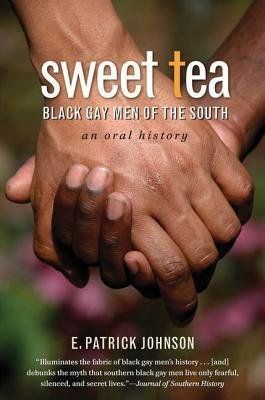
In an extensive oral history, E. Patrick Johnson tells the stories of black gay men who have made their homes in the South.


Myra A. Jolivet author of Pushed Times, Chewing Pepper, a murder mystery series


Thursday, March 2, 2017

BLACK EXCELLENCE of Scholarship.


Talking about issues, tweeting about them does not make one a scholar. Study begins the process of becoming one in your own right, thinking deepens the progression towards understanding the levels of our society and our place in it. - Dawn Wolf, Keeper of Stories  


Amistad
The Original Black Elite demonstrates the crushing power of Jim Crow by telling the story of Daniel Murray, a black man who, along with a cohort of outstanding contemporaries, achieved wealth and status in the post-Civil War era - until their assimilation into the white upper class was stymied by the rise of segregation.


·       


The New Press
It's always a good time to read The New Jim Crow, Michelle Alexander's chilling analysis of how black men are disproportionately targeted and more heavily punished by the criminal justice system - and the oppressive consequences for the black community.


·       
Simon and Schuster
In a new history of the Emmett Till case, Timothy B. Tyson recounts the horrific story of a young boy who was brutally lynched after a white woman (falsely) alleged that he made lewd comments to her. The Blood of Emmett Till weaves this infamous event, and its aftermath, into a broader story of white supremacist violence and rhetoric that extends into the present day.


·       
Broadway Books
If you somehow missed this book about a black woman's DNA being exploited for decades of research - catch up fast. This year it's becoming a movie starring Oprah.


William Morrow
The women profiled in Hidden Figures - which is already a major motion picture - made meaningful, intentional contributions to the science of American space exploration, only to be largely ignored by history.


·       
Dover
First published in 1872, black abolitionist William Still's contemporaneous accounts of the Underground Railroad offer a peephole into the experiences of people escaping slavery. The account is drawn directly from his interviews of the hundreds of people he aided in escape.


Tribeca Books
First published in 1933, The Mis-education of the Negro examines how the educational system itself worked against black children, teaching them not to seek out ambitious life paths.


Tuesday, February 28, 2017

Black Scholarship


Books by Black authors and scholars.


Keep Learning About Black History With These 23 Vital Books
Black History Month might be ending, but learning about black history never should.


By Claire Fallon
·

The shortest month of the year is coming to a close, and with it, the country's yearly celebration of Black History Month. The presidential speeches have been declaimed, and the flurry of media inquiry into black achievements throughout American history is subsiding. But the end of February need not ― and should not ― be the end of learning about the history of black people.

The history of black Americans contains immense oppression and suffering, all too often papered over by white-dominated educational systems. It also contains great artistic, scientific and social achievements, for which black creators are often given little credit. With the rich history of African-Americans often ignored save for one short month each year, it's no wonder many never learn much more than George Washington Carver's peanut-based achievements.

So why not commit to learning about black history all year round? Here are 23 books, worth reading in any season, that dive deeper into major moments in black history:

Isabel Wilkerson shines a light on the human stories behind the mass movement
of black people in the rural South to Northern, Eastern and Western cities after 1915.

·      
Simon and Schuster
An inside look at the Civil Rights Movement, from one of its most prominent figures


Basic Books
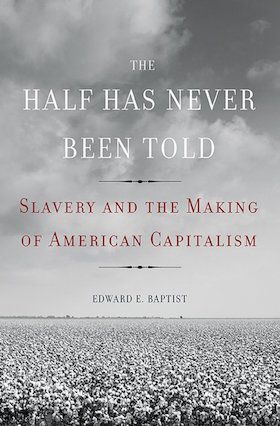
This economic history argues that the evolution of American capitalism was deeply intertwined with slave labor, and documents the inhuman cruelties of the domestic slave trade and productivity pushes that allowed the cotton trade to burgeon in the South.

·       
Metropolitan Books
Family Properties explores an oft-forgotten historical injustice: redlining, a practice by which federal agencies denied mortgage insurance to buyers in black or integrated areas. Redlining rapidly drove segregation and left black families prey to exploitative sellers. Beryl Satter, whose father battled these injustices as a Chicago lawyer, paints both a personal and a sweeping portrait of the phenomenon.

·        
·        ·       
Vintage
For anyone who remains unclear on the problem with white feminism, Killing the Black Body makes it eminently clear. Dorothy Roberts lays out the many distinct ways black women's reproductive rights have been systemically infringed upon, such as forced sterilization - injustices which have often been ignored by a mainstream feminism focused on white, middle-class women's concerns.


·       


Harper Perennial
A portrait of a legendary Supreme Court justice as a lawyer, Devil in the Grove catches up with Thurgood Marshall shortly before he brought the seminal Brown v Board of Education suit The book focuses on Marshalls defense of four young black men in Florida targeted by prosecutors and the KKK after a young white woman made rape allegations.


·       
Nation Books
Ibram X. Kendi examines how racist ideas were spread throughout American history in this sweeping, award-winning history of thought. Bonus: He recently published a reading list for The New York Times, consisting of 24 books he describes as "the most influential books on race and the black experience published in the United States for each decade of the nation's existence."


·       
Houghton Mifflin Harcourt
A detailed history of an influential Chicago-based newspaper that gave voice to the black community, The Defender traces the publication from its founding in 1905 to its role in speaking out about Jim Crow to its profound impact on politics in the middle of the century.


·       


You can call it current events or history in the making, but Wesley Lowery, a Washington Post reporter who has been covering police brutality and Black Lives Matter, brings together the results of his reporting - both political and personal.


What other books about black history should everyone be adding to their must-read lists? Add your own recommendation in the comments.

Naline Hampton


Paris Hilton in West Hollywood !!!!


Monday, January 16, 2017

The Age of Barack Obama


Pity the sad legacy of Barack Obama

Eight years ago the world was on the brink of a grand celebration: the inauguration of a brilliant and charismatic black president of the United States of America. Today we are on the edge of an abyss: the installation of a mendacious and cathartic white president who will replace him.

This is a depressing decline in the highest office of the most powerful empire in the history of the world. It could easily produce a pervasive cynicism and poisonous nihilism. Is there really any hope for truth and justice in this decadent time? Does America even have the capacity to be honest about itself and come to terms with its self-destructive addiction to money-worship and cowardly xenophobia?

Ralph Waldo Emerson and Herman Melville – the two great public intellectuals of 19th-century America – wrestled with similar questions and reached the same conclusion as Heraclitus: character is destiny (“sow a character and you reap a destiny”).

The age of Barack Obama may have been our last chance to break from our neoliberal soulcraft. We are rooted in market-driven brands that shun integrity and profit-driven policies that trump public goods. Our “post-integrity” and “post-truth” world is suffocated by entertaining brands and money-making activities that have little or nothing to do with truth, integrity or the long-term survival of the planet. We are witnessing the postmodern version of the full-scale gangsterization of the world.

The reign of Obama did not produce the nightmare of Donald Trump – but it did contribute to it. And those Obama cheerleaders who refused to make him accountable bear some responsibility.

A few of us begged and pleaded with Obama to break with the Wall Street priorities and bail out Main Street. But he followed the advice of his “smart” neoliberal advisers to bail out Wall Street. In March 2009, Obama met with Wall Street leaders. He proclaimed: I stand between you and the pitchforks. I am on your side and I will protect you, he promised them. And not one Wall Street criminal executive went to jail.

We called for the accountability of US torturers of innocent Muslims and the transparency of US drone strikes killing innocent civilians. Obama’s administration told us no civilians had been killed. And then we were told a few had been killed. And then told maybe 65 or so had been killed. Yet when an American civilian, Warren Weinstein, was killed in 2015 there was an immediate press conference with deep apologies and financial compensation. And today we still don’t know how many have had their lives taken away.

We hit the streets again with Black Lives Matter and other groups and went to jail for protesting against police killing black youth. We protested when the Israeli Defense Forces killed more than 2,000 Palestinians (including 550 children) in 50 days. Yet Obama replied with words about the difficult plight of police officers, department investigations (with no police going to jail) and the additional $225m in financial support of the Israeli army. Obama said not a mumbling word about the dead Palestinian children but he did call Baltimore black youth “criminals and thugs”.

In addition, Obama’s education policy unleashed more market forces that closed hundreds of public schools for charter ones. The top 1% got nearly two-thirds of the income growth in eight years even as child poverty, especially black child poverty, remained astronomical. Labor insurgencies in Wisconsin, Seattle and Chicago (vigorously opposed by Mayor Rahm Emanuel, a close confidant of Obama) were passed over in silence.

In 2009, Obama called New York City mayor Michael Bloomberg an “outstanding mayor”. Yet he overlooked the fact that more than 4 million people were stopped-and-frisked under Bloomberg’s watch. Along with Carl Dix and others, I sat in a jail two years later for protesting these very same policies that Obama ignored when praising Bloomberg.

Yet the mainstream media and academia failed to highlight these painful truths linked to Obama. Instead, most well-paid pundits on TV and radio celebrated the Obama brand. And most black spokespeople shamelessly defended Obama’s silences and crimes in the name of racial symbolism and their own careerism. How hypocritical to see them now speak truth to white power when most went mute in the face of black power. Their moral authority is weak and their newfound militancy is shallow.

The gross killing of US citizens with no due process after direct orders from Obama was cast aside by neoliberal supporters of all colors. And Edward Snowden, Chelsea Manning, Jeffrey Sterling and other truth-tellers were demonized just as the crimes they exposed were hardly mentioned.

The president’s greatest legislative achievement was to provide healthcare for over 25 million citizens, even as another 20 million are still uncovered. But it remained a market-based policy, created by the conservative Heritage Foundation and first pioneered by Mitt Romney in Massachusetts.

Obama’s lack of courage to confront Wall Street criminals and his lapse of character in ordering drone strikes unintentionally led to rightwing populist revolts at home and ugly Islamic fascist rebellions in the Middle East. And as deporter-in-chief – nearly 2.5 million immigrants were deported under his watch – Obama policies prefigure Trump’s barbaric plans.

Bernie Sanders gallantly tried to generate a leftwing populism but he was crushed by Clinton and Obama in the unfair Democratic party primaries. So now we find ourselves entering a neo-fascist era: a neoliberal economy on steroids, a reactionary repressive attitude toward domestic “aliens”, a militaristic cabinet eager for war and in denial of global warming. All the while, we are seeing a wholesale eclipse of truth and integrity in the name of the Trump brand, facilitated by the profit-hungry corporate media.

What a sad legacy for our hope and change candidate – even as we warriors go down swinging in the fading names of truth and justice.


To Read:
Obama’s complicated legacy on climate change

President Barack Obama. Most well-paid pundits on TV and radio celebrated the Obama brand.