Showing posts with label civil rights. Show all posts

Thursday, September 13, 2018

Small Gesture Against Wrong.


Cyclist fired for flipping off Trump's motorcade is running for local office

by Rebecca Bratek


The cyclist who was fired from her job last fall after flipping off President Trump's motorcade is running for local office in Virginia. Juli Briskman announced Wednesday she will seek a seat on the Loudoun County Board of Supervisors in 2019.
Briskman, who went viral after a photographer caught her flashing her middle finger at Mr. Trump's black SUVs, filed paperwork to challenge Republican incumbent Suzanne M. Volpe in the Algonkian District.
"You might know me as the woman who was fired for flipping off the Presidential motorcade," Briskman wrote in her campaign announcement. "And while it may be the most public display of my political opinion and activism, I have been deeply involved in the Loudoun County community for nearly 20 years."

Volpe, who has been on the board since 2012, won her 2015 contest by 4.5 percentage points, according to the Loudoun Times-Mirror. Loudoun County historically votes for Democrats on the state and federal level, the Washington Post notes, but Republicans maintain control of the county board, 6 to 3. 
Briskman told The Post that she didn't consider running for office until last October, when she was forced out of her government contracting job. 
"We have a right to peacefully protest and criticize and express dissent toward our government," she told The Post. 
"I've gotten some feedback that folks say you should respect the president. Even if you don't like what they're doing, you shouldn't show this sort of disdain. And I simply disagree, and I think the Constitution grants me that privilege." 
Briskman did not immediately respond to a request for comment from CBS News.
Briskman was cycling on her usual path in Northern Virginia last Halloween when the president's black SUVs pulled up alongside her. A White House news photographer who was trailing behind immortalized the moment.
The photo of her gesture quickly went viral, and Briskman even featured the photo on her Facebook and Twitter pages. After she informed her employer of the photo, she said her bosses pulled her aside and told her she had violated the company's social media policy.
But if she had the opportunity, Briskman told The Post, she'd probably do it again.

The link for this story is here.


Monday, September 10, 2018

Stand For Something, and Someone Else.


Civil Rights protestor alone and defiant.

I grew up during this era and everything was devoured, meaning all information about the Civil Rights movement was taken in by the general public eagerly and with dread. It was exciting for reasons this generation cannot grasp.

Every time period exists within a period of time. How it was important and unique to its time is important to the future where it is judged. It has always been like this in human history! - Gregory E. Woods
, Keeper of Stories 9/7/18 


Kaepernick making a statement.


Cicely Tyson speaking at Aretha Franklin's funeral. 2017. 

I am always moved by Cicely Tyson's presence, what she says, does not say and how she conveys deep intangibles with her eyes, and by right of ancestry and legacy!" - Gregory E. Woods, Keeper of Stories (Sept. 7, 2018) 


Shekere played by Chadra Pittman made by Madeline Yyodele of Women of the Calabash. photo by Bill Thomas.


Saturday, August 25, 2018

When Dr. King spoke: Power of a People's Pain.


When Dr. King spoke: "If you can't fly, then run, if you can't run, then walk, if you can't walk, then crawl, but whatever you do, you have to keep moving forward" I heard the enforcement of the laws of purpose, and felt at the time what it meant to Colored folks. Being young, and being old and a Negro in those times held a stress level that strangled dreams. It killed by fear and emboldened by necessity a killer instinct in others, and made the leaders arise from within the caste system created by the fears white lives, who developed themselves into monsters or tolerant moderates, afraid to do what was right in the sight of God!

Dr. King, I recall, was despised by so many ministers, but I saw fear of changing the white people around them alive in the purposes the church served in Colored neighborhoods. No one killed like white folks! I remember how television delivered these messages from Martin Luther King Jr. the way word spread through the forests into the towns and cities where 'Members' lived. I remember old people talking about the way storytellers told the old stories to the children around fires in the dark of night! The fires became radio, radio became television and television became the internet, where the family circles disappeared into the mist of separate rain drops.

Now, today broken circles pretend to bring people together. Pieces of a dream are no more effective than broken bowls. The old ways of fighting the demons are the methods to bring the worst of killers to their comeuppance, to trail, to the courts of law, but not the law created by the killers and framed by the beneficiaries of their brutal murders and acquisitions by force and terror.

It is less and it is more our Ancients speaking the old truths our interactions with those from Europe stripped from our knowing of the deep that gave Dr. King his voice... - Gregory E. Woods, Keeper of Stories 4/18/18 

Thursday, December 28, 2017

Birth Day of Nichelle Nichols


Nichelle Nichols. She was born December 28th, 1932.
In life became a vocalist, model, actress, writer, producer, activist, and a NASA Recruiter.
She is most remembered for her role in the first Star Trek series in the 1960's. It was quite important. Those days Colored women then and prior to that show usually did not play sophisticated roles. It was quite the coup significant enough to rank among the great pivotal roles in the Civil Rights movement. - Gregory E. Woods, Keeper of Stories 


Nichelle Nicoles at 80 years of age with caption of her on set of Star Trek as Uhuru in late 1960's.


Sunday, November 12, 2017

Lynching in America


Lynching in America: Targeting Black Veterans

Introduction

From the end of the Civil War to the years following World War II, thousands of African Americans were the victims of lynchings and other forms of racial terror in the United States, often in violent and public acts of torture that traumatized black communities throughout the country. The terror and violence of the lynching era profoundly impacted race relations and shaped the geographical, social, and economic conditions of African Americans in ways that are still evident today.

Lynching and racial violence fueled the migration of millions of black people from the South into urban ghettos in the North and West during the first half of the 20th century and created a social environment in which racial subordination and segregation was maintained for decades with limited official resistance. This violence reinforced a legacy of racial inequality that has never been adequately addressed and continues to be evident in the injustice and unfairness of the administration of criminal justice in America.

Military service sparked dreams of racial equality for generations of African Americans. But most black veterans were not welcomed home and honored for their service. Instead, during the lynching era, many black veterans were targeted for mistreatment, violence, and murder because of their race and status as veterans. Indeed, black veterans risked violence simply by wearing their uniforms on American soil.3 

The United States condoned the racial terror and Jim Crow segregation that plagued the entire black population even as it purported to fight for freedom and democracy and against fascism and racism abroad. This report is a supplement to Lynching in America: Confronting the Legacy of Racial Terror that specifically examines the history of racial violence targeting African American veterans in the United States in the late 19th and early 20th centuries.

Between the end of Reconstruction and the years following World War II, thousands of black veterans were accosted, assaulted, and attacked, and many were lynched. Black veterans died at the hands of mobs and persons acting under the color of official authority; many survived near-lynchings; and countless others suffered severe assaults and social humiliation. Documenting these atrocities is vital to understanding the incongruity of our country’s professed ideals of freedom and democracy while tolerating ongoing violence against people of color within our own borders. As veteran and later civil rights leader Hosea Williams said, “I had fought in World War II, and I once was captured by the German army, and I want to tell you the Germans never were as inhumane as the state troopers of Alabama.”4 

EJI believes that understanding the persecution of African American veterans is an important step toward understanding how racial violence and hatred terrorized black Americans in the century following emancipation.


The Myth of Racial Inferiority and the Black Soldier

Throughout our country’s history, African Americans have looked hopefully to military service as a way to achieve racial equality and opportunity.5 

But the dream that donning a military uniform and fighting for national honor would earn black soldiers respect and human dignity conflicted with the status black people in America had held for centuries — and often resulted in disappointment.

The enslavement of black people in the United States for more than 200 years built wealth, opportunity, and prosperity for millions of white Americans. At the same time, American slavery assigned to black people a lifelong status of bondage and servitude based on race, and created a myth of racial inferiority to justify the racial hierarchy. Under this racist belief system, whites were hard working, smart, and morally advanced, while black people were dumb, lazy, childlike, and uncivilized.

The idea that black people were naturally and permanently inferior to white people became deeply rooted in individual’s minds, state and federal laws, and national institutions. This ideology grew so strong that it survived the abolition of slavery and evolved into new systems of racial inequality and abuse. In the period from 1877 to 1950, it took the form of lynching and racial terror.

For a century after emancipation, African American servicemen and the black community at large “staked much of their claims to freedom and equality on their military service, and had cited it as a vindication of African American manhood.”6

Fighting for democracy was emblematic of the equality African Americans desired, and by serving their country, black veterans displayed their attachment to the nation and commitment to American values. In the face of this persistent racial hierarchy, and despite being denied full citizenship, many African Americans fought for the United States and for the aspiration that conditions would improve.7

Instead, black soldiers who served in the armed forces from the Civil War to World War II, during the height of racial terror and violence, faced hatred and racism even in “peace” time.

On the other side of African Americans’ hopes were whites’ fears that black veterans asserting and demanding equality would disrupt the social order built on white supremacy and the racialized economic order from which many benefitted. Many politicians feared that black veterans would believe they were equal to whites and worthy of more than poverty, poor educational opportunities, and menial labor, and would no longer be satisfied to work on farms for low wages. Southern politicians in particular feared that independent and empowered black veterans would lead other African Americans — especially in the South, where most still lived — to challenge racial segregation and subordination in bold and dangerous ways. In the minds of fearful whites, black veterans’ training in weapons and combat and their success defending the nation in battle were more a threat than a source of pride, and many voiced concerns about how those skills could be used at home. Black veterans epitomized white Southern fears of “a black population that had either forgotten or outright rejected its place in the region’s racial hierarchy.”8

The hopeful determination of black veterans seeking equality after military service challenged the defiant determination of white Americans to reinforce white supremacy, maintain racial inequality, and suppress black veterans’ potential as leaders and change agents. During the Civil War, white leaders viewed black soldiers as liable to use violence to destroy the social order. Throughout the lynching era, African American veterans were seen as an increasingly imminent threat to the South’s racial caste system.9

This tension made black servicemen targets for discrimination, mistreatment, and violence within the military and for deadly racial terror at home. . . [to be continued] 

Friday, May 26, 2017

IS she right?


Protestor stomping the flag.

I am not a patriotic type of cat the way that is popular today and was the bane of my people's existence, but I've learned over the years not to cross the line disrespecting what is sacred to another. Anything considered thus deserves, at the least, thoughts centered around 'why' and 'how' in relation to who is before you, and your thoughts about a people who annoy or enrage you! These were taught to me by my people, and my father, in particular, who was a Civil Rights leader in his time!

Is she wrong?  

Gregory E. Woods, Keeper of Stories
Feb. 23, 2017


Monday, January 23, 2017

Women's March on Washington sign of protest (fourth story)


Lemuel (my son), and I at the Smithsonian subway station Jan. 21, 2017. I was on my way to the Women's March. It was 10 in the morning, and Lemuel was on duty watching the crowds streaming by his solitary place enjoying the moment, ever ready to smile and to serve. That early in the day he was already getting high numbers of people strolling out of the subway on to the Mall. The trains were full to the maximum so early in large part because Metro put the trains on Saturday schedule. That means fewer trains to service more people!

If you haven't caught it yet, my son is a police officer.

Gregory E. Woods, Keeper of Stories 1/21/17


I saw only two men who were a possible threat to the women in the crowd. They were moving in a way that smelled of menace. The first man was a Black man, who found within the courage to rage and vent against the women talking from the perspective of their bodies about abortion, the punany, the political assaults in the president's insults. He trembled with an old rage. I watched him for a tiny sliver of time before he suddenly stood up and began sending his words into the crowd. It was dark and the women who heard it bundled themselves in prayer and practiced fear, but only a moment or two. They were in numbers and he looked around and found no other man like him in the crowd. For a moment he was defiant. There was no response. There was just women staring up at him and looking away on purpose giving him no consideration. He tried to address the audience in his head, but that was too obvious making him look awkward and unsure. Then he was gone. He turned on his heels and darted away like a deer.

The second man was a fool. The people, many of us were walking away from the closed event up Independence Avenue. There were too many people trying to get on the subway so walking home or to the Stadium to get on the hundreds of buses to return guests home across the country and back to airports was the only thing to do. For those who don't know that avenue is flanked by government. The Library of Congress, the U.S. Capital, the administration building of the Library of Congress and other buildings all protected by Capital Police, and they are a tight well trained unit.

Walking into the happy crowd of all sorts of people one of those masked agitator men walked through the walkers with three women all dressed in a ragged assemblage of found clothing. His face was masked in a black cloth leading a chant the women he was with responded to. His energy was off. His eyes were distant, separated from his appearance and seemed to walk ahead of him. It was obvious he was from out of town. Men like that don't tread softly amongst police ever at the ready on a constant basis for terrorist attacks. It was laughable because the wrong move!! If I could be surrounded by Capital Police, and I was a few years ago for being a terrorist while sitting in a park not far from there with a friend what would a cat like that face on Capital Hill?


Gregory E. Woods, Keeper of Stories
Jan. 22, 2017 


Women's March on Washington signs of protest from the pain of... photo by Gaby Grebski.


Saturday, September 24, 2016

'nuff said!


"In one cartoon a lot was conveyed. How it is received, studied and analyzed is dependent upon the willingness to unlearn and see what is really a part of us on each side of the divide created by dictatorial patriotism." - Gregory E. Woods, Keeper of Stories


contradiction deep in white thought and sensibilities.


Thursday, September 15, 2016

Telling the stories . . .


"The Children of Selma"


A picture of my wife hangs in the "National Voting Rights Museum" in Selma, Alabama. That's her on the left at 11 years old with her friends after their first trip to jail on "Bloody Sunday" 1965. These children were traumatized for the right to vote. You can see it in their eyes.
- Michael Foote Sept. 12, 2016


Colored roses ...


Dr. George Washington Carver was one of the first to experiment extensively with plants.
As petals get their nourishment through stem, the idea is to split the stem into several channels and dip each one in a different colored water. This way all the colors will be drawn by the stem into petals and resultant rose will have all the colors in it. The same method can be applied to other flowers especially to Chrysanthemum and Hydrangea. You can use the same idea to color any flower, anyway you like. - Pk Smith (Sept. 13, 2016) ‎


Timeline of Africans in the Americas.


Sad. Here we are in the States enamored by British royalty and influenced by British law as if the two are not intertwined. We live in an illusion believing there are separations, and differences between British and white American sensibilities today.

The spirit has to change to change the Euro-American. Blacks throughout the African Diaspora need to delve deep into the who of who we are as the cloaks upon our body of thought is shed that dominates our thought processes. . .

In short, we need to no longer be Black White people. .
. - Gregory E. Woods, Keeper of Stories 9.13.16


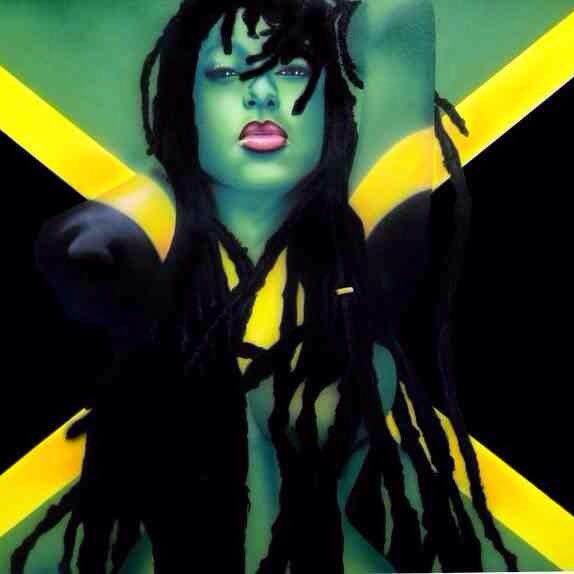
Jamaican woman as Art.

Sunday, September 11, 2016

overcoming, becoming!


Tuskegee Airman, Martin Luther King Jr. Bodyguard Dies at 93

September 5, 2016
Camila Domonoske


Dabney Montgomery fought for America on two battlegrounds: in southern Italy, during World War II, and in the American South, during the civil rights movement.

Montgomery, who died on Saturday at the age of 93, was a ground crewman with the Tuskegee Airmen. He went on to be a bodyguard for Martin Luther King Jr., guarding the civil rights leader during the march from Selma, Ala. — his hometown, Montgomery, along with the other Tuskegee Airmen, received the Congressional Gold Medal in 2007.

The heels from the shoes he wore during the march from Selma to Montgomery will be on display in the new National Museum of African American History and Culture in Washington, which is opening later this month.

Dabney Montgomery grew up in Selma; his father was a fireman (a stoker) for Southern Railroad.
"Watching my father board his train, I wanted to be an engineer when I grew up," he told the Wall Street Journal last year. "But only white men were engineers then, and only a few blacks became firemen."

As a young man Montgomery was drafted, trained as a ground support crew and sent with the Tuskegee Airmen to southern Italy, where he supported the pilots.

"When I saw guys who looked like me flying airplanes, I was filled with hope that segregation would soon end," he told the Journal.

But when he returned home at the end of the war, discrimination was rampant.
After he was discharged from duty in Atlanta, Montgomery went to the train station to head home to Alabama. He described what happened next in an oral history project by the Alliance of Ethics and Art.

"Before I could get in, a white officer threw up his hand. 'You can't come in this door, boy, you got to go around the back,' " Montgomery remembers. "That was 10 minutes after I received my honorable discharge."

Things were even worse once he got to Selma, he says. He told the Wall Street Journal that when he tried to register to vote, the woman at the courthouse told him he needed the signatures of three white men.

Montgomery got the signatures. When he brought them in, there was a new requirement: that he own $1,000 worth of property. He didn't have it, and she wouldn't let him register.
He went to college on the GI Bill and moved to New York, but the civil rights movement brought him back to the south.

In an interview, Montgomery described the moment he decided to go home:
"I was sitting at home in New York City and I saw that attack on people in Selma on the Edmund Pettus Bridge. They gassed them and beat them with sticks — the sheriff, the officials in their uniforms, because they was marching to the governor's office to vote.
"And I saw them knocked down, and I saw the gas in the air, and I was sitting here — this is happening in my hometown, Selma! I said, 'I'm going and get[ting] a taste of that gas.'
"I went to my director and said, 'I've got to go home. ... I'm going home to take part in that movement.' "
So he did. He joined the protests in Selma and became one of Martin Luther King Jr.'s bodyguards, The Associated Press reports, guarding the leader on the famous 1965 march from Selma.
The AP notes that Montgomery, who later moved back to New York and settled in Harlem, continued to serve his community for his entire life:
"He worked for the New York City Housing Authority and as a volunteer outreach worker for a nonprofit that assists the elderly.
"Montgomery remained active until his final weeks, frequently visiting schools to talk to children about his experiences growing up in Alabama, serving in the war and marching for civil rights.
" 'He just loved motivating young people to be somebody,' [his wife] Amelia Montgomery said. 'That was his joy.' "

Tuskegee Airman Dabney Montgomery waves to the crowd as he is introduced before the start of a baseball game in New York. in June 2013. photo by Kathy Willens for AP


Thursday, August 25, 2016

A Fear held by white Americans: Black Empowerment


Lena Horne once said, "Malcolm X made me very strong at a time I needed to understand
what I was angry about. He had peace in his heart. He exerted a big influence on me."


the National Association of Colored Graduate Nurses


1908-08-25


On this date in 1908, the National Association of Colored Graduate Nurses (NACGN) was founded. Martha Minerva Franklin founded the association.

This was an organization dedicated to promoting the standards and welfare of Black nurses and breaking down racial discrimination in the profession. This organization served an important need, as Black nurses at that time were not welcome in the American Nurses Association (ANA). The main purpose of the NACGN was to win integration of Black RNs into nursing schools, nursing jobs, and nursing organizations. In the early years, membership was low and the major achievement was the development of a registry of Black nurses.

Then, in 1934, Estelle Massey Riddle Osborne (who, three years earlier, had become the first black person to obtain a master's degree in nursing) was elected president of NACGN. Her top priority was the hiring of the group's first paid executive director, and the person she chose was Mabel K. Staupers. For 12 consecutive years, Osborne and Staupers attended each ANA House of Delegates meeting, lobbying for complete integration of Black nurses into their professional association. RNs had to be a member of a State Nurses Association, such as NYSNA, to belong to ANA. But 16 southern states and Washington, D. C. didn't allow Black members.

They traveled throughout the country, drumming up new members and support for the NACGN's goals among conventional nursing groups, other Black organizations, and the Black press. They were phenomenally successful. In 1933, the NACGN had only 175 members; by 1949, that number had grown to 947. One of their greatest achievements was their successful lobbying for an integrated Cadet Nurse Corps during World War II. This, in turn, produced a snowball effect; by the end of the war, all but a few state nurses associations admitted Blacks as members. Shortly after the war, the ANA suggested that it take over the functions of the NACGN "and that its program be expanded for the complete integration of Negro nurses."

The ANA also agreed to continue awarding the Mary Mahoney Medal to the person or group contributing the most to inter-group relations. The NACGN had created that award in 1936, named for the nation's first Black graduate nurse. So, in 1951, the NACGN did something rare in the history of bureaucracies: it declared victory and voted itself out of business and its members voted to merge with the American Nurses Association.

Reference:
National Black Nurses Association, Inc.
8630 Fenton Street, Suite 330
Silver Spring, MD 20910-3803


Sunday, July 3, 2016

Courage to be a BLACK WOMAN


Josephine Baker was born Freda Josephine McDonald on June 3, 1906, in St. Louis, Missouri. Her mother, Carrie McDonald, was a washerwoman who had given up her dreams of becoming a music-hall dancer. Her father, Eddie Carson, was a vaudeville drummer. He abandoned Carrie and Josephine shortly after her birth. Carrie remarried soon thereafter and would have several more children in the coming years.

To help support her growing family, at age 8 Josephine cleaned houses and babysat for wealthy white families, often being poorly treated. She briefly returned to school two years later before running away from home at age 13 and finding work as a waitress at a club. While working there, she married a man named Willie Wells, from whom she divorced only weeks later.

It was also around this time that Josephine first took up dancing, honing her skills both in clubs and in street performances, and by 1919 she was touring the United States with the Jones Family Band and the Dixie Steppers performing comedic skits. In 1921, Josephine married a man named Willie Baker, whose name she would keep for the rest of her life despite their divorce years later. In 1923, Baker landed a role in the musical Shuffle Along as a member of the chorus, and the comic touch that she brought to the part made her popular with audiences. Looking to parlay these early successes, Baker moved to New York City and was soon performing in Chocolate Dandies and, along with Ethel Waters, in the floor show of the Plantation Club, where again she quickly became a crowd favorite.

In 1925, at the peak of France's obsession with American jazz and all things exotic, Baker traveled to Paris to perform in La Revue NËgre at the Theatre des Champs-ElysÈes. She made an immediate impression on French audiences when, with dance partner Joe Alex, she performed the Danse Sauvage, in which she wore only a feather skirt.

However, it was the following year, at the Folies BergËre music hall, one of the most popular of the era, that Baker's career would reach a major turning point. In a performance called La Folie du Jour, Baker danced wearing little more than a skirt made of 16 bananas. The show was wildly popular with Parisian audiences and Baker was soon among the most popular and highest-paid performers in Europe, having the admiration of cultural figures like Pablo Picasso, Ernest Hemingway and E. E. Cummings and earning herself nicknames like Black Venus and Black Pearl. She also received more than 1,000 marriage proposals.

Capitalizing on this success, Baker sang professionally for the first time in 1930, and several years later landed film roles as a singer in Zou-Zou and Princesse Tam-Tam. The money she earned from her performances soon allowed her to purchase an estate in Castelnaud-Fayrac, in the southwest of France. She named the estate Les Milandes, and soon paid to move her family there from St. Louis.

In 1936, riding the wave of popularity she was enjoying in France, Baker returned to the United States to perform in the Ziegfield Follies, hoping to establish herself as a performer in her home country as well. However, she was met with a generally hostile, racist reaction and quickly returned to France, crestfallen at her mistreatment. Upon her return, Baker married French industrialist Jean Lion and obtained citizenship from the country that had embraced her as one of its own.

When World War II erupted later that year, Baker worked for the Red Cross during the occupation of France. As a member of the Free French Forces she also entertained troops in both Africa and the Middle East. Perhaps most importantly, however, Baker did work for the French Resistance, at times smuggling messages hidden in her sheet music and even in her underwear. For these efforts, at the wars end, Baker was awarded both the Croix de Guerre and the Legion of Honour with the rosette of the Resistance, two of France s highest military honors.

Following the war, Baker spent most of her time at Les Milandes with her family. In 1947, she married French orchestra leader Jo Bouillon, and beginning in 1950 began to adopt babies from around the world. She adopted 12 children in all, creating what she referred to as her rainbow tribe and her experiment in brotherhood. She often invited people to the estate to see these children, to demonstrate that people of different races could in fact live together harmoniously.

During the 1950's, Baker frequently returned to the United States to lend her support to the Civil Rights Movement, participating in demonstrations and boycotting segregated clubs and concert venues. In 1963, Baker participated, alongside Martin Luther King Jr., in the March on Washington, and was among the many notable speakers that day. In honor of her efforts, the NAACP eventually named May 20th, Josephine Baker Day.

After decades of rejection by her countrymen and a lifetime spent dealing with racism, in 1973 Baker performed at Carnegie Hall in New York and was greeted with a standing ovation. She was so moved by her reception that she wept openly before her audience. The show was a huge success and marked Baker s comeback to the stage.

Read more here:


Josephine Baker in her heyday!


Wednesday, June 1, 2016

To Hugh


with Hugh Hefner's star
May 18, 2010 ·
 
Hugh Hefner is important to American history, thought and perception changes around sex, the feminist movement, and Civil Rights and constitutional law. - Gregory E. Woods (6.1.15)


Monday, February 15, 2016

TO The fear beyond & within white Americans


About immigration and xenophobia:

"It is so unfortunate and sad what is happening around the world. As a Cuban I understand everything these people are going thru, especially those who do not reside in their native countries anymore but have family that are being affected by this monstrosity. Let's all become ONE and help put an end to this. The more the merrier!"

 - Jenny Arzola, model (February 24, 2014 )


Jenny Arzola, model in jeans. (2014)


Saturday, July 25, 2015

One Day poolside


Sabrina Sanchez
September 25, 2012
The thrust of the Civil Rights movement was to be equal with whites. Beyond that scope was no vision. Beyond these shores was no capacity to extend and follow the momentum of the movement to the freedom fighters in Africa. As a result the bonds that should exist between the African states and countries and Black America do not exist. We suffer because of this failure in our projections and our negotiations with Power for power. If this were not true we'd not be sitting with our hat in hand hoping we can vote every 25 years! - Gregory E. Woods 7.31.13


Thursday, May 7, 2015

Freedom from TERROR


flag & Jessica Alicia Bertrand by Curtis Noble on 4th of July


back out gown on Bellamy Young
closing ceremony of the 54th Monte Carlo Television Festival


Black man hung & tormented!
 
"It is only for the sake of those without hope that hope is given to us."
~ Walter Benjamin


Sunday, April 5, 2015

A Badass Woman #2


Viola Gregg Liuzzo

A housewife who answered MLK's call. After watching news footage of white policemen beating and tear-gassing protestors for Black voting rights in Selma, Viola Gregg Liuzzo — a Detroit housewife and mother of five — decided to join the fight. In March 1965, she drove down to Alabama to serve as a carpooler for a Martin Luther King Jr.-led march.Just days after her arrival, Liuzzo was driving a 19-year-old Black man, Leroy Moton, home when three Ku Klux Klan members and a man who was later identified as an FBI informant shot her to death. President Lyndon Johnson, King, and prominent labor leaders condemned Liuzzo’s murder, but the recognition didn’t keep her family from being harassed. White supremacists burned a cross in front of her Detroit home, and the FBI made up rumors about her sleeping with Black men and doing drugs. Her husband had to hire armed guards, and in a Ladies' Home Journal survey, 55% of readers branded Liuzzo an irresponsible mother.Still, the sacrifice of Violet Liuzzo — a white female martyr of the Civil Rights Movement — is cited as one reason Congress passed the landmark Voting Rights Act of 1965. Today, Liuzzo is listed on the Civil Rights Memorial in Montgomery


a powerful woman -
Viola Gregg Liuzzo, who answered Dr. King's call & paid with her life


Thursday, January 8, 2015

WATER taught Jesus


walking on water Miss Brittany Ferretti (l.) & another model !!!!


Miss Brittany Ferretti, in as few words as possible allow me to say why this photograph of your climbing a steep mountain struck a cord, and shed a light on some things beneath the surface of American life.


"The heights white women had to climb out of and away from the low estimation and value white men historically placed upon them is a dizzy height above the arena of their plight in Europe. The last part of the 20th century saw the fastest movement away from the clutches of their men's powers over their esteem, and lives.


The Civil Rights movement's momentum fed white women, and the strategies of the Civil Rights movement gave insight to the chink in white men's thinking, and paved a way for white women to effectively fight during negotiations for their freedoms! The troubling thing is the sense of ingratitude. Today's white woman does not know, seems not to know, and others pretend not to know the indebtedness they have to the American Indian women, and the African women they enslaved." - Gregory E. Woods, Keeper of Stories 12.25.14


water play in the waves