Showing posts with label Black Scholars. Show all posts

Tuesday, February 13, 2018

White Woman's Claims, Angela Davis' Observation!


Angela Davis and Hilary Clinton.


“In 1972 Anne Braden wrote what she called ‘A letter to southern white women’. And I just want to share a short passage from that letter… ‘I believe that no white woman reared in the south, or perhaps anywhere in this racist country can find freedom as a woman until she deals in her own consciousness with the question of race. We grow up little girls absorbing the stereotypes of race, the picture of ourselves as somehow privileged because of the color of our skin. These two mythologies become intertwined; and there is no way to free ourselves from one without dealing with the other.' 

It seems like Hillary Clinton should have read her, you know. Because Clinton was deeply mistaken in thinking that she could [call up] an obsolete notion of feminism that focuses on the categorical woman with all of its clandestine processes of racialization and class hierarchy. She used an outmoded notion of feminism that revolves around white middle class and bourgeois women.” ~ Angela Davis


Angela Davis found not guilty by an all-white jury June 4, 1972 of murder, kidnapping & criminal conspiracy charges... The complexity to this moment, and the historic struggle of Africans requires great research and search of soul, mind, emotion and collective memory! The up and coming generation need more than a twitter mindset to be humans. - Gregory E. Woods, Keeper of Stories 


Monday, January 1, 2018

TO Think About.


“We made too many speeches and didn’t do the necessary work; the unglamorous off camera work that would have made it possible. That was our great mistake, ceremony that lacked substance.” ~ Dr. John Henrik Clarke 


Dr. John Henrik Clarke born in Union Springs, Alabama on this day January 1, 1933. John Henrik Clarke, Pan-Africanist writer, historian, and professor.


Monday, November 13, 2017

Lynching in America [2.]


Fighting for Freedom: The Civil War and its Aftermath

When 11 Southern states seceded from the Union to form the Confederate States of America and sparked the Civil War in 1861, they made no secret of their ultimate aim:  to preserve the institution of slavery. In the words of Alexander H. Stephens, vice president of the Confederacy, the ideological “cornerstone” of the new nation they sought to form was that “the negro is not equal to the white man” and “slavery and subordination to the superior race is his natural and moral condition.”10

Congress officially authorized the Union army to accept black soldiers on July 17, 1862. But national leaders largely considered the Civil War “a white man’s war” and the Union was reluctant to use black soldiers in combat. Northern military personnel, politicians, and President Abraham Lincoln himself expressed fear that armed black soldiers would ruin white soldiers’ morale, be harmful to the war effort, or as one Ohio Congressman warned, prove so essential that victory would weaken white supremacy. “If you make [the black man] the instrument by which your battles are fought, the means by which your victories are won,” the congressman argued in his plea against black soldiers in combat, “you must treat him as a victor is entitled to be treated, with all decent and becoming respect.”11

As the war dragged on and the Union incurred more casualties,12 objections to black combat troops faded. The Emancipation Proclamation of 1863, which applied only to those enslaved in the Confederate states, provided that black soldiers would be accepted into all military positions.13
The navy gained 19,000 black sailors and 179,000 black men joined the army, making up 10 percent of its troops. Some 40,000 were killed fighting for the United States.14

Black Union soldiers included men who had been free in the North before the war, black men who had lived free in the South in the midst of slavery, and some who escaped slavery after the war began and joined the fight in hopes of guaranteeing their freedom and winning that of others. But acceptance into the military did not mean equal treatment. As the war against the Confederacy raged, black soldiers also had to fight for equal pay and rations that the War Department promised during recruitment. A black soldier from Pennsylvania reported that his unit was overcome with despair upon learning they would be paid less than white soldiers, and many protested by refusing to accept any payment. Despite protests and pleas from leaders including Frederick Douglass, Congress refused to pass legislation equalizing black and white soldiers’ pay until 1864.15

Black participation was far less common, more complicated, and more staunchly resisted on the other side of the conflict. The Confederacy was based on a belief in white supremacy and black inferiority and a commitment to continue slavery. The Confederate army refused to enlist or arm black soldiers even as the turning tide of the war led some Confederates to urge that enslaved black people should be ordered to fight just as they were ordered to work. Some enslaved black men were taken to the battlefield as servants for Confederate officers, but formal black enlistment in the Confederate army was prohibited until a desperate and largely inconsequential act of the Confederate Congress authorized black Confederate military service on March 13, 1865, just weeks before the Confederacy surrendered. As historian Leon Litwack wrote:
Few slaves were ever enlisted [in the Confederate Army], and none of them apparently had the opportunity to fight. Had the Confederacy managed to raise a black army, it would seem unlikely, particularly after 1863, that it could have fought with the same sense of commitment and self-pride that propelled the black troops in the Union Army. When he first heard of the act to recruit blacks for the Confederate Army, a Virginia freedman recalled, he had suddenly found himself unable to restrain his emotions. “They asked me if I would fight for my country. I said, ‘I have no country.’”16
The Civil War ended with the Confederacy’s surrender in the spring of 1865. The formal, nationwide end of slavery came in December 1865 with the ratification of the Thirteenth Amendment to the Constitution, which prohibits slavery “except as punishment for crime.” The legal instruments that ended racialized chattel slavery in America nonetheless did nothing to address the myth of racial hierarchy that sustained slavery. Black people were free under the law, but that did not mean whites recognized them as fully human. Nationwide but particularly in the South, white identity was grounded in the belief that whites are inherently superior to African Americans.

After the war, whites reacted violently to the notion that they would now have to treat their former human property as equals and pay for their labor. In numerous recorded incidents, plantation owners attacked black people simply for claiming their freedom.17 Many surviving black veterans returned to the South, where they had lived — many in the status of slave — before the war. Carrying hopes of starting farms and finding loved ones lost for years or even decades, these veterans frequently faced grave danger from violent attacks and racist laws designed to restore the racial hierarchy. The success of African Americans as trained soldiers challenged the idea that black people were fit only for servitude and undermined a central tenet of white supremacy. With their military training, black soldiers “represented both a viable alternative source of community leadership and a direct physical threat to white supremacy when they came home.”18

After a brief period, the victorious federal government gave up on Reconstruction and withdrew from the South in 1877, abandoning its duty to protect newly freed black people and enforce the citizenship rights they now held. Exploitative systems of convict leasing and sharecropping impeded economic progress and returned many black people to a status very similar to slavery. President Andrew Johnson took office following President Lincoln’s assassination and adopted policies that opposed black voting rights, restored Confederates’ citizenship, and allowed Southern former rebels to reestablish white supremacy and dominate black people with impunity.19

The Fourteenth Amendment, which was ratified in 1868, established that all persons born in the United States, regardless of race, are full citizens of the United States and the of the states in which they reside, and are entitled to the “privileges and immunities” of citizenship, including due process. Though a hopeful development, the Supreme Court quickly dismantled the amendment’s promise in The Slaughterhouse Cases and U.S. v. Cruikshank.20 As a result, African Americans accused of violating the racial order were met with violence and terror; they received little protection from local officials, and they had no claim to federal assistance.

Black veterans were seen as a particularly strong threat to racial hierarchy and were an early target of discriminatory state laws. To eliminate black gun ownership, which had reached unprecedented levels during the war due to black military service, states including Alabama, Florida, Kentucky, Louisiana, and Mississippi passed laws that made it a crime for an African American to possess a firearm.21

Florida’s Black Code of 1866 prohibited black people from possessing “any Bowie-knife, dirk, sword, firearms or ammunition of any kind” and made violations punishable by public whipping.22 Mississippi’s statute declared “that no freedman, free negro or mulatto, not in the military service of the United States government, and not licensed so to do by the board of police of his or her country, shall keep or carry fire-arms of any kind, or any ammunition, dirk or bowie knife.” Whites were free to own and carry firearms, but law enforcement officials were stationed at train stations to seize black veterans’ guns when they arrived; veterans who did not comply were beaten and some were even shot by police.23

Southern newspapers fueled whites’ fears of black veterans by publishing sensational accounts of so-called “race wars”: conflicts between supposedly innocent white police and drunk and armed former black soldiers intent on starting trouble. In May 1866, after whites attacked the black community in Memphis in what became known as the Memphis Massacre, the white-owned Memphis Argus published an editorial blaming the massacre on black gun ownership. The editorial board wrote:
Again the irrepressible conflict of races has broken out in our midst, and again our streets are stained with blood. And this time, there can be no mistake about it; the whole blame of this most tragical [sic] and bloody riot lies, as usual, with the poor, ignorant, deluded blacks. . . . [W]e cannot suffer the occasion to pass without again calling the attention of the authorities to the indispensable necessity of disarming these poor creatures, who have so often shown themselves utterly unfit to be trusted with firearms. On this occasion the facts all go to show that but for this much-abused privilege accorded to them by misguided and misjudging friends, there would have been no riot . . . The universal questions asked on all corners of the streets is, “Why are not the negroes disarmed?”24
The violence in Memphis is now widely acknowledged as a racially-motivated massacre. Dozens of black people were raped, injured, or killed, and many black homes, churches, and schools were destroyed by fire. The two white casualties were killed by white rioters.25

As the white Southern press decried their access to weapons and state legislatures strived to disarm them, black veterans were in dire need of protection.26 In 1868, the Secretary of War reported to Congress that black soldiers in Kentucky, “[h]aving served in the Union Army, were the special objects of persecution, and in hundreds of instances have been driven from their homes.”27 Peter Branford, a United States Colored Troops veteran, was shot and killed “without cause or provocation” in Mercer County, Kentucky, while numerous other veterans were threatened, beaten, and whipped merely for attempting to locate their families and rebuild their lives after the war.

At Bardstown in Nelson County, Kentucky, a mob brutally lynched a United States Colored Troops veteran. The mob stripped him of his clothes, beat him, and then cut off his sexual organs. He was then forced to run half a mile to a bridge outside of town, where he was shot and killed. The terror inflicted upon black veterans by Southern whites served to perpetuate the racial caste system and maintain power in the hands of whites after the defeat of the Confederacy.29

[to be continued] 
Colored soldiers. The 54th Regiment Massachusetts Volunteer Infantry at the Second Battle of Fort Wagner, South Carolina, 1863.

Learn More: Houston Riot of 1917

Sunday, November 12, 2017

Lynching in America


Lynching in America: Targeting Black Veterans

Introduction

From the end of the Civil War to the years following World War II, thousands of African Americans were the victims of lynchings and other forms of racial terror in the United States, often in violent and public acts of torture that traumatized black communities throughout the country. The terror and violence of the lynching era profoundly impacted race relations and shaped the geographical, social, and economic conditions of African Americans in ways that are still evident today.

Lynching and racial violence fueled the migration of millions of black people from the South into urban ghettos in the North and West during the first half of the 20th century and created a social environment in which racial subordination and segregation was maintained for decades with limited official resistance. This violence reinforced a legacy of racial inequality that has never been adequately addressed and continues to be evident in the injustice and unfairness of the administration of criminal justice in America.

Military service sparked dreams of racial equality for generations of African Americans. But most black veterans were not welcomed home and honored for their service. Instead, during the lynching era, many black veterans were targeted for mistreatment, violence, and murder because of their race and status as veterans. Indeed, black veterans risked violence simply by wearing their uniforms on American soil.3 

The United States condoned the racial terror and Jim Crow segregation that plagued the entire black population even as it purported to fight for freedom and democracy and against fascism and racism abroad. This report is a supplement to Lynching in America: Confronting the Legacy of Racial Terror that specifically examines the history of racial violence targeting African American veterans in the United States in the late 19th and early 20th centuries.

Between the end of Reconstruction and the years following World War II, thousands of black veterans were accosted, assaulted, and attacked, and many were lynched. Black veterans died at the hands of mobs and persons acting under the color of official authority; many survived near-lynchings; and countless others suffered severe assaults and social humiliation. Documenting these atrocities is vital to understanding the incongruity of our country’s professed ideals of freedom and democracy while tolerating ongoing violence against people of color within our own borders. As veteran and later civil rights leader Hosea Williams said, “I had fought in World War II, and I once was captured by the German army, and I want to tell you the Germans never were as inhumane as the state troopers of Alabama.”4 

EJI believes that understanding the persecution of African American veterans is an important step toward understanding how racial violence and hatred terrorized black Americans in the century following emancipation.


The Myth of Racial Inferiority and the Black Soldier

Throughout our country’s history, African Americans have looked hopefully to military service as a way to achieve racial equality and opportunity.5 

But the dream that donning a military uniform and fighting for national honor would earn black soldiers respect and human dignity conflicted with the status black people in America had held for centuries — and often resulted in disappointment.

The enslavement of black people in the United States for more than 200 years built wealth, opportunity, and prosperity for millions of white Americans. At the same time, American slavery assigned to black people a lifelong status of bondage and servitude based on race, and created a myth of racial inferiority to justify the racial hierarchy. Under this racist belief system, whites were hard working, smart, and morally advanced, while black people were dumb, lazy, childlike, and uncivilized.

The idea that black people were naturally and permanently inferior to white people became deeply rooted in individual’s minds, state and federal laws, and national institutions. This ideology grew so strong that it survived the abolition of slavery and evolved into new systems of racial inequality and abuse. In the period from 1877 to 1950, it took the form of lynching and racial terror.

For a century after emancipation, African American servicemen and the black community at large “staked much of their claims to freedom and equality on their military service, and had cited it as a vindication of African American manhood.”6

Fighting for democracy was emblematic of the equality African Americans desired, and by serving their country, black veterans displayed their attachment to the nation and commitment to American values. In the face of this persistent racial hierarchy, and despite being denied full citizenship, many African Americans fought for the United States and for the aspiration that conditions would improve.7

Instead, black soldiers who served in the armed forces from the Civil War to World War II, during the height of racial terror and violence, faced hatred and racism even in “peace” time.

On the other side of African Americans’ hopes were whites’ fears that black veterans asserting and demanding equality would disrupt the social order built on white supremacy and the racialized economic order from which many benefitted. Many politicians feared that black veterans would believe they were equal to whites and worthy of more than poverty, poor educational opportunities, and menial labor, and would no longer be satisfied to work on farms for low wages. Southern politicians in particular feared that independent and empowered black veterans would lead other African Americans — especially in the South, where most still lived — to challenge racial segregation and subordination in bold and dangerous ways. In the minds of fearful whites, black veterans’ training in weapons and combat and their success defending the nation in battle were more a threat than a source of pride, and many voiced concerns about how those skills could be used at home. Black veterans epitomized white Southern fears of “a black population that had either forgotten or outright rejected its place in the region’s racial hierarchy.”8

The hopeful determination of black veterans seeking equality after military service challenged the defiant determination of white Americans to reinforce white supremacy, maintain racial inequality, and suppress black veterans’ potential as leaders and change agents. During the Civil War, white leaders viewed black soldiers as liable to use violence to destroy the social order. Throughout the lynching era, African American veterans were seen as an increasingly imminent threat to the South’s racial caste system.9

This tension made black servicemen targets for discrimination, mistreatment, and violence within the military and for deadly racial terror at home. . . [to be continued] 

Thursday, September 14, 2017

She Speaks for her People!


1921-09-14


*On this date in 1921, Constance Baker Motley was born. She was an African American lawyer, judge, and politician.

From New Haven, Connecticut she is one of nine children to a family who had migrated to America from the Caribbean island of Nevis. While attending school, she was active in the New Haven Youth Council, and the New Haven Adult Community council. Motley attended Fisk University, transferring to New York University-graduating in 1943 with a degree in economics. She attained her law degree from Columbia University in 1946.

While at Columbia she became acquainted with Thurgood Marshall, helping with the task needed to file Brown v. Board of Education in 1954 through the NAACP. An instrumental player of that legal team, Motley argued other cases before the Supreme Court, one of her best known cases was Meredith v. Fair1962, helping James Meredith gain admission to the University of Mississippi in 1962.

She furthered her cause for civil rights in 1964 by being elected to the New York Senate, the first black woman to hold that office. In 1966, Motley was appointed to a federal judgeship in 1966, the first African American woman to hold that position. She made many important rulings in her new post. In 1991, Motley ruled that it is illegal for a company to make photocopies of articles and book excepts and assemble them into anthologies for sale to college or university students.

She has written countless articles and legal observations which reflect her stance on civil rights and its importance in America. One example is: Equal Justice Under Law: The Life of a Pioneer for Black Civil Rights and Women's Rights 1998. This presents a detailed legal history of her fight against the "separate but equal" racial practices of the 1950s and 1960s. In the fall of 1997 Montley served as jurist-in-residence at the Indiana University School of Law. Constance Baker Motley died on September 28, 2005.


Reference:

Black Women in America An Historical Encyclopedia
Volumes 1 and 2, edited by Darlene Clark Hine
Copyright 1993, Carlson Publishing Inc., Brooklyn, New York
ISBN 0-926019-61-9


Constance Baker Motley was the first Negro woman elected to the New York Senate (1964),
and appointed to a Federal Judgeship (1966). In this capacity she was the first Black woman.


Sarah Winnemucca (1844 – 1891) Native activist.


Sarah Winnemucca (1844 – 1891) was a prominent female Native American activist and educator, and an influential figure in the United States' nineteenth-century Indian policies. Winnemucca was notable for being the first Native American woman known to secure a copyright and to publish in the English language. Sarah was a person of two worlds. At the time of her birth her people had only very limited contact with Euro-Americans; however she spent much of her adult life in white society.......Why? - author unknown


Coretta Scott King speaking before the public.


"I came to the realization that we had been thrust into the forefront of a movement to liberate oppressed people, not only in Montgomery but also throughout our country, & this movement had worldwide implications. I felt blessed to have been called to be a part of such a noble and historic cause." - Mrs. King
 

Tuesday, August 22, 2017

Tribute to a A MAN among MEN!


Dick Gregory and his daughter, Ayanna Gregory.


"I have never known a more brilliant and powerful human being. Thank you Daddy for an extraordinary life and legacy. What you brought to this planet is unparalleled. I am clear that you were ready. You're work here was done. And in the midst of all the chaos and confusion, you left here with so much peace, grace and clarity. And for that I am beyond grateful. The joy of getting to spend a lifetime with you far exceeds the sadness in my heart. I can't wait to receive your instructions from the other side. I love you Great Warrior! We will carry your light. The seeds you have planted in me have set the foundation for the healing work that has become my life. Your legacy continues..."


Saturday, March 4, 2017

BLACK EXCELLENCE 2


Third World Press

Chancellor Williams's 1971 tome excavated the submerged history of black people in Africa and beyond. The extensively researched book unsettled the problematic common assumption that black civilization created no meaningful cultural or historical achievements. I was alive with vigor finding and studying Dr. Williams' book. He was alive when I purchased it, and I felt charged by that fact because he worked near by me in DC and I hoped I would eventually meet people who'd study with him, or were mentored by him. I did and I do feel gratitude knowing more understanding will come to those who study this work deepening their understanding of this country and Black people. - Dawn Wolf, Keeper of Stories
·       


·       
Penguin Classics
Malcolm X collaborated with journalist Alex Haley to write his autobiography over the two years leading up to his assassination. The final result has been a landmark influence on many black thinkers and activists.


·       
Chicago Review Press
Assata Shakur's autobiography takes readers inside black activist movements of the 1970s, giving a first-person account of her involvement and of how targeting by federal agencies eventually weakened groups like the Black Panthers. For those who don't know she was the mother of rapper, Tupac Shakur.


·       
Vintage
A now-classic history of the Haitian Revolution of 1794-1803, The Black Jacobins tracks and analyzes the massive, sustained slave revolt, led by Toussaint L'Ouverture, that led to the formation of the free state of Haiti.


·       

Friday, March 3, 2017

ATTENTION TO THE DETAILS


Hello everyone, I hope you're doing well. 
 
One of the great problems of our community is that we and our children are often kept in the dark on the ugly history of this nation.  We are not led to understand the intricacies of slavery, how it came to be, and how choices made 300 years ago create the world in which we live.
 
Most importantly, we don't understand how much of slavery, oppression, Jim Crow and racial terror was driven by hard, cold economics.  In fact, if most black people were aware how many trillions of dollars were stolen from our people, the reparations debate would be over. 
 
To help with this issue, I've put together a lecture series in TheBlackHistorySchool.com called "The Economics of Slavery."  This program consists of a set of recorded lectures I've given on Black Economic History and how all of this ties into the world in which we live together. 
 
The book I use for this lecture series is "Black Labor, White Wealth," by Dr Claud Anderson.  This book should be required reading for every black child in America.  
 
This is a course for anyone who wants to have a raw and authentic analysis of America's racial past, the economic incentives for the creation of this past, and how these factors often influence our lives today.  Right now, the program consists of a 7-lecture sequence, but I am going to continue to add recordings to the vault that you can view at your discretion.  
 
The material is self-paced and pre-recorded, and comes with a 30-day, 100% money-back guarantee.  
 
You can sign up for the program at a discounted price of $69.99 by using this link.  The price will go up very soon, so you may want to take advantage of this opportunity now. 
 
I created this program because I truly believe, at the bottom of my heart, that we've been lied to for 400 years.  My lectures are designed to tell you the truth.  
 
Sincerely,
Feb. 27, 2017  


CreateSpace
 
The Souls of Black Folk is a groundbreaking early work of sociology, published in 1903, and advocates for black education, voting rights and other civil rights while capturing the state of affairs and of debate at the time.


·       
Knopf

An expansive, lavishly illustrated history of the variegated black experience in America, Life Upon These Shores has a wide scope but is rooted in specificity through hundreds of photos and careful scholarship.


·       


Little Brown and Company
You can call it current events or history in the making, but Wesley Lowery, a Washington Post reporter who has been covering police brutality and Black Lives Matter, brings together the results of his reporting - both political and personal.


University of North Carolina Press
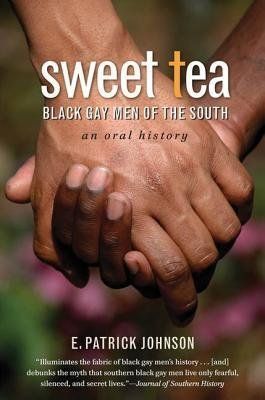
In an extensive oral history, E. Patrick Johnson tells the stories of black gay men who have made their homes in the South.


Myra A. Jolivet author of Pushed Times, Chewing Pepper, a murder mystery series


Thursday, March 2, 2017

BLACK EXCELLENCE of Scholarship.


Talking about issues, tweeting about them does not make one a scholar. Study begins the process of becoming one in your own right, thinking deepens the progression towards understanding the levels of our society and our place in it. - Dawn Wolf, Keeper of Stories  


Amistad
The Original Black Elite demonstrates the crushing power of Jim Crow by telling the story of Daniel Murray, a black man who, along with a cohort of outstanding contemporaries, achieved wealth and status in the post-Civil War era - until their assimilation into the white upper class was stymied by the rise of segregation.


·       


The New Press
It's always a good time to read The New Jim Crow, Michelle Alexander's chilling analysis of how black men are disproportionately targeted and more heavily punished by the criminal justice system - and the oppressive consequences for the black community.


·       
Simon and Schuster
In a new history of the Emmett Till case, Timothy B. Tyson recounts the horrific story of a young boy who was brutally lynched after a white woman (falsely) alleged that he made lewd comments to her. The Blood of Emmett Till weaves this infamous event, and its aftermath, into a broader story of white supremacist violence and rhetoric that extends into the present day.


·       
Broadway Books
If you somehow missed this book about a black woman's DNA being exploited for decades of research - catch up fast. This year it's becoming a movie starring Oprah.


William Morrow
The women profiled in Hidden Figures - which is already a major motion picture - made meaningful, intentional contributions to the science of American space exploration, only to be largely ignored by history.


·       
Dover
First published in 1872, black abolitionist William Still's contemporaneous accounts of the Underground Railroad offer a peephole into the experiences of people escaping slavery. The account is drawn directly from his interviews of the hundreds of people he aided in escape.


Tribeca Books
First published in 1933, The Mis-education of the Negro examines how the educational system itself worked against black children, teaching them not to seek out ambitious life paths.


Tuesday, February 28, 2017

Black Scholarship


Books by Black authors and scholars.


Keep Learning About Black History With These 23 Vital Books
Black History Month might be ending, but learning about black history never should.


By Claire Fallon
·

The shortest month of the year is coming to a close, and with it, the country's yearly celebration of Black History Month. The presidential speeches have been declaimed, and the flurry of media inquiry into black achievements throughout American history is subsiding. But the end of February need not ― and should not ― be the end of learning about the history of black people.

The history of black Americans contains immense oppression and suffering, all too often papered over by white-dominated educational systems. It also contains great artistic, scientific and social achievements, for which black creators are often given little credit. With the rich history of African-Americans often ignored save for one short month each year, it's no wonder many never learn much more than George Washington Carver's peanut-based achievements.

So why not commit to learning about black history all year round? Here are 23 books, worth reading in any season, that dive deeper into major moments in black history:

Isabel Wilkerson shines a light on the human stories behind the mass movement
of black people in the rural South to Northern, Eastern and Western cities after 1915.

·      
Simon and Schuster
An inside look at the Civil Rights Movement, from one of its most prominent figures


Basic Books
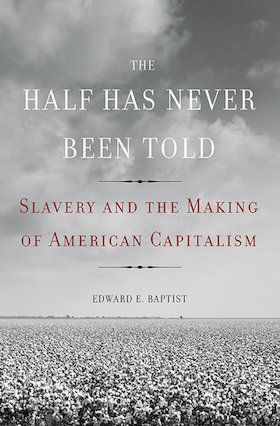
This economic history argues that the evolution of American capitalism was deeply intertwined with slave labor, and documents the inhuman cruelties of the domestic slave trade and productivity pushes that allowed the cotton trade to burgeon in the South.

·       
Metropolitan Books
Family Properties explores an oft-forgotten historical injustice: redlining, a practice by which federal agencies denied mortgage insurance to buyers in black or integrated areas. Redlining rapidly drove segregation and left black families prey to exploitative sellers. Beryl Satter, whose father battled these injustices as a Chicago lawyer, paints both a personal and a sweeping portrait of the phenomenon.

·        
·        ·       
Vintage
For anyone who remains unclear on the problem with white feminism, Killing the Black Body makes it eminently clear. Dorothy Roberts lays out the many distinct ways black women's reproductive rights have been systemically infringed upon, such as forced sterilization - injustices which have often been ignored by a mainstream feminism focused on white, middle-class women's concerns.


·       


Harper Perennial
A portrait of a legendary Supreme Court justice as a lawyer, Devil in the Grove catches up with Thurgood Marshall shortly before he brought the seminal Brown v Board of Education suit The book focuses on Marshalls defense of four young black men in Florida targeted by prosecutors and the KKK after a young white woman made rape allegations.


·       
Nation Books
Ibram X. Kendi examines how racist ideas were spread throughout American history in this sweeping, award-winning history of thought. Bonus: He recently published a reading list for The New York Times, consisting of 24 books he describes as "the most influential books on race and the black experience published in the United States for each decade of the nation's existence."


·       
Houghton Mifflin Harcourt
A detailed history of an influential Chicago-based newspaper that gave voice to the black community, The Defender traces the publication from its founding in 1905 to its role in speaking out about Jim Crow to its profound impact on politics in the middle of the century.


·       


You can call it current events or history in the making, but Wesley Lowery, a Washington Post reporter who has been covering police brutality and Black Lives Matter, brings together the results of his reporting - both political and personal.


What other books about black history should everyone be adding to their must-read lists? Add your own recommendation in the comments.

Naline Hampton


Paris Hilton in West Hollywood !!!!


Saturday, September 10, 2016

Thursday, February 4, 2016

Be The Healing


Dr. Joy DeGruy Leary


"And I teach a course... to graduate students on Post Traumatic Slave Syndrome. Now let me explain something; I don't do race relations 101. I don't have time... This is a 600 level course. And people of color that walked [into] this room, walked in at the 600 level, having lived in their skin. So I'm not dealing with the person who's going, -'Do ya think?' I don't have time; because there's too many people hemorrhaging for me [ta] even begin to do that." ~ Dr. Joy DeGruy Leary


Excellence is a Given amongst Africans


Cassandra Wilson further solidifies her status as not only the most brilliant jazz singer
of her generation, but one of the New South’s most provocative voices.


Amiri Baraka (center with beard) visited students in Harlem to discuss
his controversial drama Dutchman. Part 1. In those days there was no social divide
between great Black men and the young who sought them out. It is a very old
tradition. It is the African way throughout the coastlines and interior of the
Land of the Blacks. - Gregory E. Woods, Keeper of Stories


Tuesday, September 16, 2014

WEST OF THE WHEEL


J. Wesley Boyd Jr., scholar & facilitator 


"I think of all the time this brother of mine has been working, assisting births, unfolding dreams and building relationships between people, cultures and political factions. I've seen in our work together the Orisha powers employed to tear away Maya (illusion) knowing that the attendant risk factors will create change after fear and resistance have come and gone. It is his process, his way of living in this realm of healers that assuages my concerns about things not changing. 

You see if we are to change the world we change ourselves, our perceptions. We change our belief into knowing and our harbored resentments into loving exchanges. This is the essence of spiritual work and the chief tools of the initiated is love, play, magic and dance!" - Gregory E. Woods, Keeper of Stories 8.19.14

a story of the man himself

Wednesday, February 5, 2014

The Spiritual Nature of the King Years - Part I


There are 16 parts to this series. The author, David Tolson, is a friend of mine. More important than that he is a scholar, a gentle man, fierce and convinced in the conviction of his purpose and destiny!! - Gregory E. Woods, Keeper of Stories


A friend once asked me who the most significant person in the twentieth century was. It was his position that Albert Einstein trumped all others because of his theory on relativity. The applications of Einstein’s theory are breathtaking, and it is quite possible that there would be no modern society as we know if it were not for E=MC2. To a mathematician, the equation has a certain elegance; to an engineer the equation advanced theoretical physics and was the catalyst of many great inventions; to the multinational corporation it permitted its CEO to bark instructions out to his staff over a global network; to the small businessperson it had a trickle-down affect as he/she benefited from the commerce that was created at the top of the economic/business food-chain; to the hard working citizen, though its impact may have been transparent, it opened unprecedented opportunities for employment, leisure and entrepreneurship; and to the couch potato it permitted one to remotely surf through anyone of more than 500 channels over satellite/cable/FIOS television. 

For purposes of this article, I’d like to ask/answer the question differently: What was the most significant event of the twentieth century? Notwithstanding the detonation of atomic bombs over Hiroshima and Nagasaki; or sending men to the moon and returning them safely to the earth; or creating a global, electronic network, it is my position that the modern world as we know it was created by the defiance of four spiritual men: Mahatma Gandhi; the Ayatollah Khomeini; Pope John Paul II; and Dr. Martin Luther King, Jr. I say “spiritual men,” not in the sense that these men were inspired by the same spirituality that may drive you or me, but in the sense that they believed that a power beyond their ability, real or perceived, would aid them in reaching their destiny. 


READ MORE by David Tolson